A digital birth chart report is only helpful if it explains the chart in a way a beginner can actually use. A chart wheel full of symbols may look impressive, but most first-time readers do not need more data. They need structure.
The best reports translate a natal chart into a clear starting point: core personality patterns, emotional style, outward presentation, and a few bigger life themes worth paying attention to. That is very different from dumping every planet, sign, house, and aspect onto the page with no reading order.
What should a useful digital birth chart report explain?
A useful report should answer the questions a beginner is already asking.
At minimum, it should explain:
- What the chart is based on: birth date, birth time, and birth place
- Why birth time matters: especially for the Ascendant and house structure
- The Big Three: Sun, Moon, and Rising signs
- How the full chart adds nuance beyond Sun sign astrology
- A few practical life themes: communication style, motivation, relationships, work habits, and pressure points
- How to read the report in order instead of jumping between symbols
If a report skips the basics and opens with dense jargon, it is not beginner-friendly. If it gives only vague personality lines with no explanation of where they come from, it is also weak.
A solid digital astrology report should make the logic visible. It should show why a reading says something, not just state it.
How is a report different from a chart wheel?
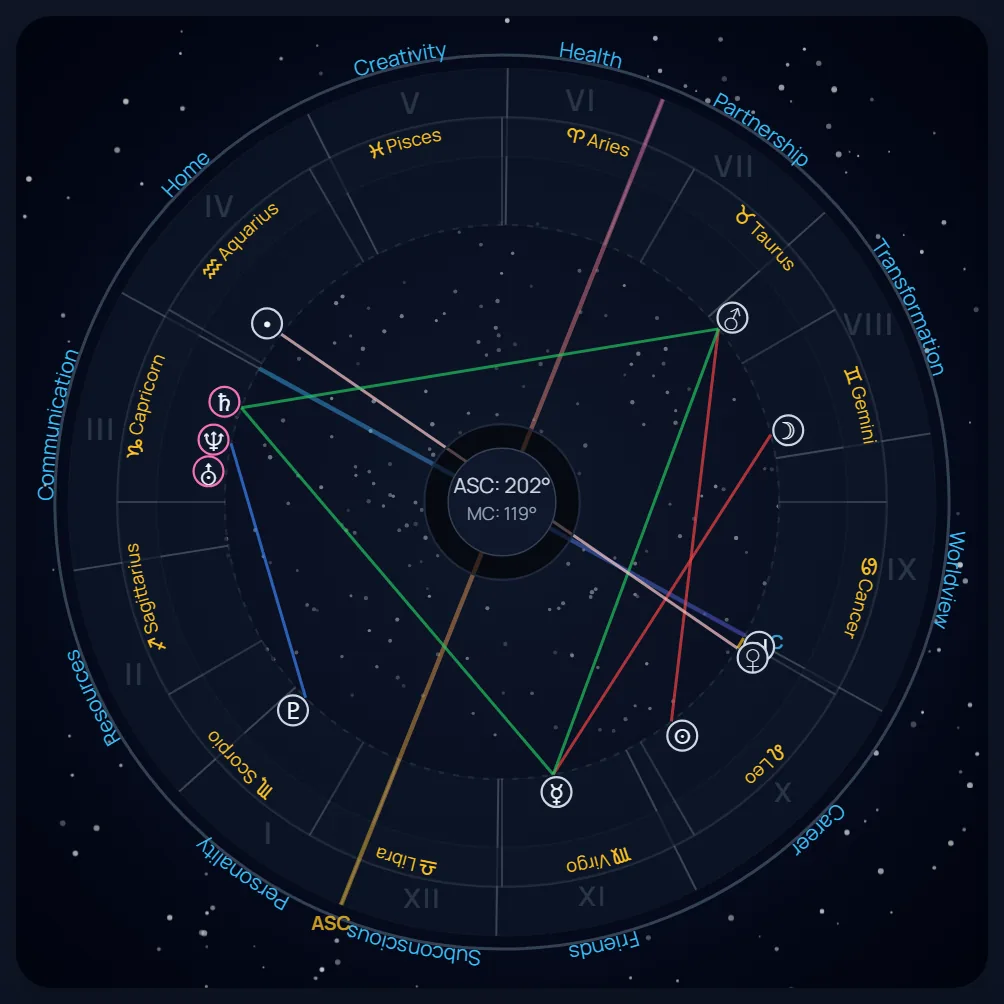
A chart wheel is the visual map. A report is the interpretation.
The wheel shows placements and structure:
- planets
- zodiac signs
- houses
- aspects
- angles
For experienced readers, that map is enough to start interpreting. For beginners, it usually is not. The wheel answers where things are. The report should answer what those placements may suggest in everyday life.
A simple example helps:
- A chart wheel may show the Moon in a certain sign and house.
- A report should explain how that combination can relate to emotional habits, comfort needs, and common reactions under stress.
That difference matters. Without interpretation, a chart wheel is reference material. With explanation, it becomes readable.
For a fuller breakdown of how a quick snapshot differs from a deeper reading, see Birth Chart Logic: Big Three vs Full Chart and What Actually Changes.
What should a beginner read first in a natal chart?
The best entry point is usually the Big Three:
- Sun sign: basic style, drive, and sense of identity
- Moon sign: emotional pattern, comfort style, and instinctive reactions
- Rising sign (Ascendant): first impression, approach to new situations, and how the chart is organized through houses
This gives a baseline fast. It is not the whole chart, but it is often the clearest first layer.
A good beginner report should explain these three separately and then show how they work together.
For example:
- One placement may suggest a direct, visible style.
- Another may point to a more private emotional process.
- A third may shape how a person comes across in unfamiliar settings.
That contrast is often where the reading starts to feel real. People are not one-note. A strong natal chart report shows internal differences instead of flattening everything into one personality label.
If the reading order still feels confusing, Understanding a Birth Chart Step by Step: What to Read First is a useful companion.
What changes the interpretation beyond Sun sign astrology?
Sun sign astrology gives one symbol out of a full system. A natal chart reading becomes more specific because it adds layers.
The main layers are:
The Moon
The Moon adds emotional rhythm. Two people with the same Sun sign can handle stress, closeness, or routine very differently because their Moon placement points to different comfort patterns.
The Rising sign
The Rising sign changes the outer approach and sets the house layout. That means it can change which life areas become emphasized in a report.
Houses
Houses show where themes tend to show up. A placement linked with communication, for example, can feel different depending on whether the report connects it more strongly with home life, friendships, work, or one-to-one relationships.
Aspects
Aspects describe how placements interact. This is where a report often moves beyond description into pattern-reading.
A practical example:
- A beginner report may describe a person as motivated and expressive based on one placement.
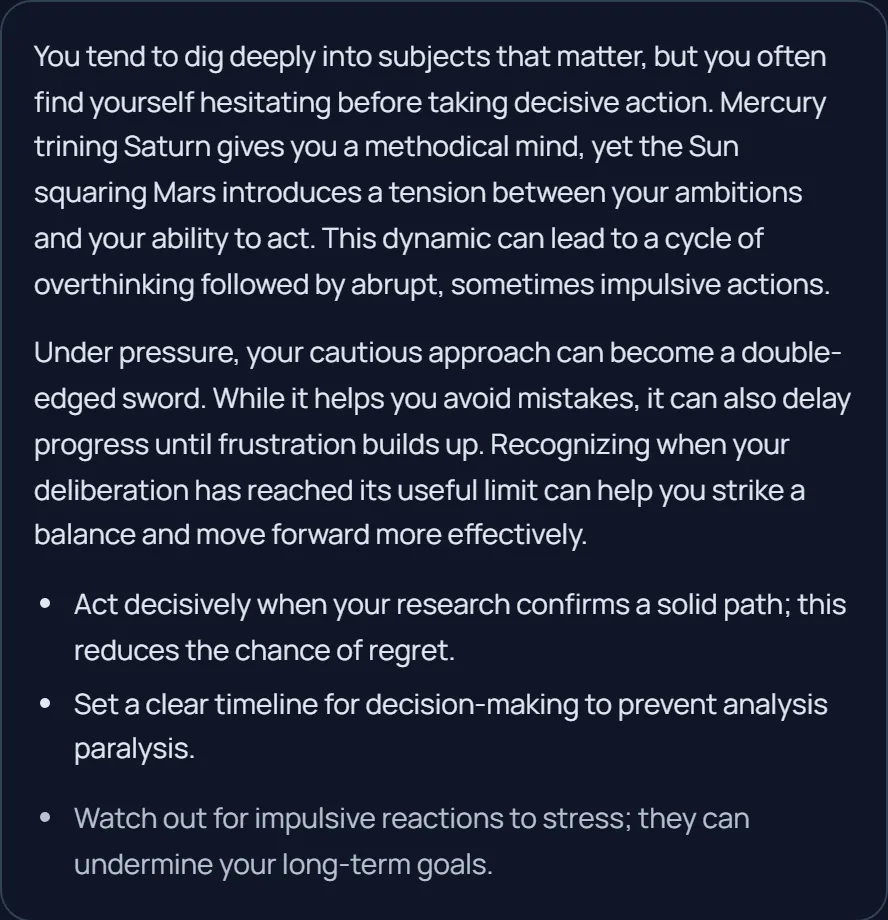
- An aspect pattern may add that this drive comes with friction, stop-start energy, or tension between speed and caution.
That is more useful than saying someone is simply “confident” or “sensitive.” It gives a pattern a reader can actually observe.
What should a digital astrology report avoid?
Not every long report is a good report. Some are just padded.
Watch for these problems:
Too much jargon too early
If the report opens with technical language and never translates it, it creates distance instead of clarity.
Generic personality writing
If every paragraph could apply to almost anyone, the report is not doing enough chart-based work.
No reading hierarchy
A beginner should not have to guess what matters most. Strong reports guide the reader from core placements to supporting details.
Predictive certainty
A natal chart report should frame astrology as a tool for reflection and pattern awareness. It should not claim to prove facts, guarantee outcomes, or predict exact events.
No practical use case
Abstract keywords are not enough. A report should connect placements to recognizable situations such as conflict style, decision pressure, social pacing, work habits, or preferred environments.
What does a strong beginner report usually include after the Big Three?
Once the baseline is clear, the next useful sections usually cover a few core areas.
Communication and thinking style
This helps explain how someone tends to process information, speak, write, or make sense of complex situations. In practical terms, this section can be useful for understanding why some people prefer quick decisions while others need more time to sort through details.
Motivation and action style
This section often helps a reader notice how they start tasks, handle competition, or respond to obstacles. Good reports keep this grounded in behavior, not hype.
Relationship patterns
A useful report does not promise compatibility outcomes. It may, however, help a reader notice themes around closeness, independence, reassurance, boundaries, or communication habits in one-to-one dynamics.
Work habits and direction
This is not about guaranteed career success. It is more useful as a reflection on pace, responsibility, public style, and the kinds of roles or environments that may feel more natural or more demanding.
Repeating tensions and growth edges
This is where aspects and house emphasis can become especially helpful. A report may show recurring friction between rest and ambition, privacy and visibility, or caution and spontaneity. Those are usable observations because they can be checked against real behavior.
For plain-language help with chart terms, How to Read Your Birth Chart Without Getting Lost in Astrology Terms can make the rest of the report easier to follow.
How detailed should a natal chart report be?
For a beginner, more detail is not always better.
A useful first report is usually:
- clear before exhaustive
- organized before comprehensive
- interpretive before technical
That often means starting with a core snapshot, then expanding into a full chart reading later if interest grows.
A report becomes harder to use when it treats every placement as equally important. In practice, some placements carry more weight in a beginner reading because they create the strongest framework.
A good report should leave the reader with a few memorable takeaways, not twenty disconnected mini-descriptions.
How can someone tell whether a report is actually beginner-friendly?
A beginner-friendly birth chart report usually does three things well:
-
It explains the system in plain English.
A reader should not need prior astrology knowledge to follow it. -
It prioritizes the most meaningful placements first.
The report should start with the core snapshot before moving into finer points. -
It turns symbols into real-life patterns.
The reading should connect chart features to observable habits, tensions, and preferences.
A quick test is simple: after reading the first few sections, could a beginner explain the difference between the Sun, Moon, and Rising signs in their own words? If not, the report may be too vague or too technical.
FAQ
Is a digital birth chart report worth it if the chart wheel is free?
It can be, if the report adds structure and explanation. The wheel shows placements. The report should help a beginner understand what those placements may mean together.
What is the first thing to look for in a natal chart report?
Start with the Big Three: Sun, Moon, and Rising. That usually gives the clearest core snapshot before the report moves into houses, aspects, and broader life themes.
Can a report explain more than a Sun sign horoscope?
Yes. A natal chart report uses multiple placements and their relationships. That creates a more layered reading than a single-sign horoscope.
Does a useful report need to cover every placement?
No. For beginners, selective clarity is often more useful than total coverage. The strongest reports explain the major patterns first and avoid drowning the reader in detail.
What should a report say about life direction?
It should frame life direction as themes, motivations, recurring tensions, and areas of focus rather than fixed outcomes. The useful question is not “What will happen?” but “What patterns keep showing up in choices and priorities?”
The bottom line
A strong birth chart report should do more than label placements. It should help a beginner understand the chart in a logical order, starting with the Big Three and expanding into a few grounded life themes.
The difference between a forgettable digital astrology report and a useful one is simple: the useful one explains how the pieces work together, in plain language, with patterns a reader can actually recognize.