Some readers use a natal chart as a symbolic language for thinking about habits, relationships and choices. This article does not establish that interest in astrology is growing: a claim about a social trend would need relevant survey or usage data.
What a chart contains
A natal chart represents astronomical positions for a specified birth date, time and place, using a chosen zodiac and house system. Astrologers assign meanings to those positions and their relationships. The calculation and the interpretation are different steps: accurately locating a planet does not prove a claim about personality.
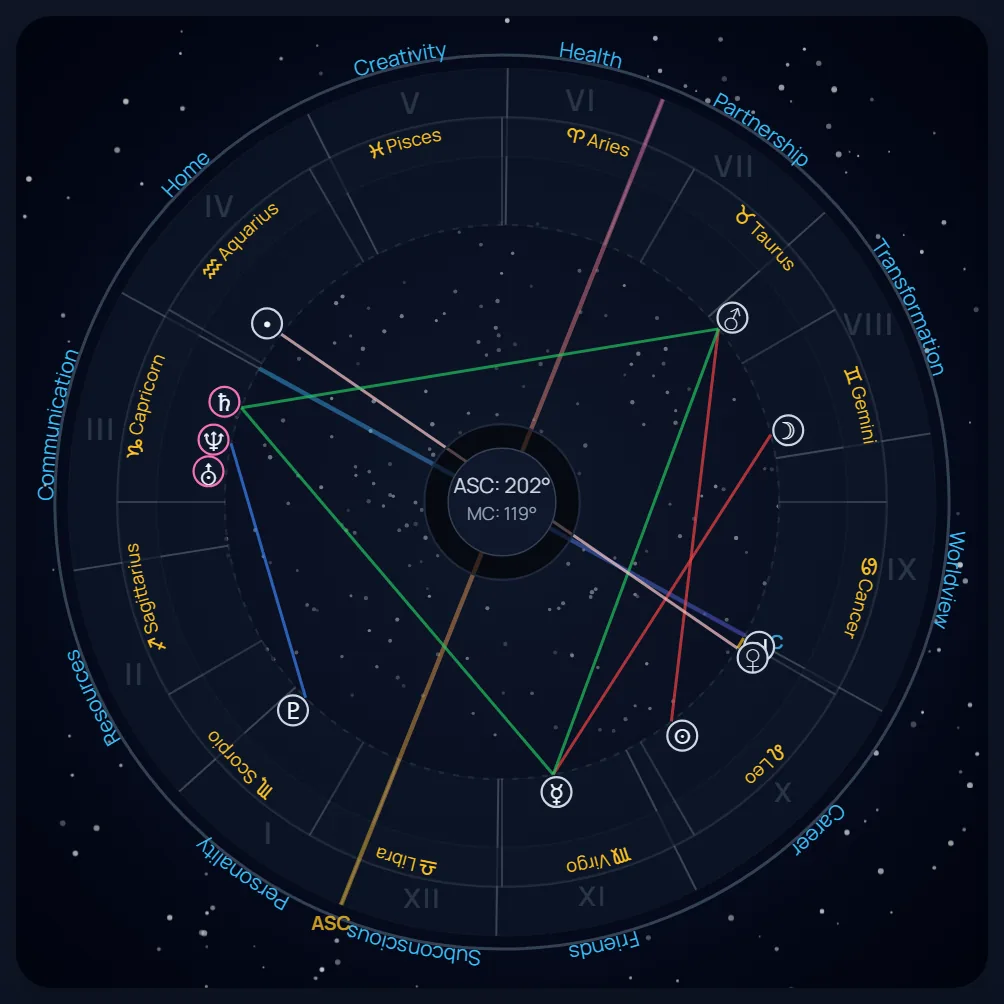
Questions a symbolic reading can prompt
If this framework interests you, use it to form questions rather than conclusions about yourself:
- Which habits can I actually observe in my daily life?
- Which examples support an interpretation, and which contradict it?
- Am I accepting a statement because it is specific, or because it is flattering and broadly applicable?
- What practical change would make sense even without the chart?
An interpretation can offer language for reflection. Whether that language is useful is something to assess through experience; it is not proof that the chart has measured a trait or explained its cause.
Keep personal recognition separate from evidence
A passage may feel accurate because it describes a familiar concern. That feeling alone cannot establish that the same interpretation would distinguish you from other people. Do not use a reading to diagnose health problems, determine another person's intentions or make financial decisions.
An uncertain birth time also limits what can be calculated reliably. The Ascendant and houses should remain uncertain, and the Sun and Moon may need to be checked across the possible time range if either changes sign that day.
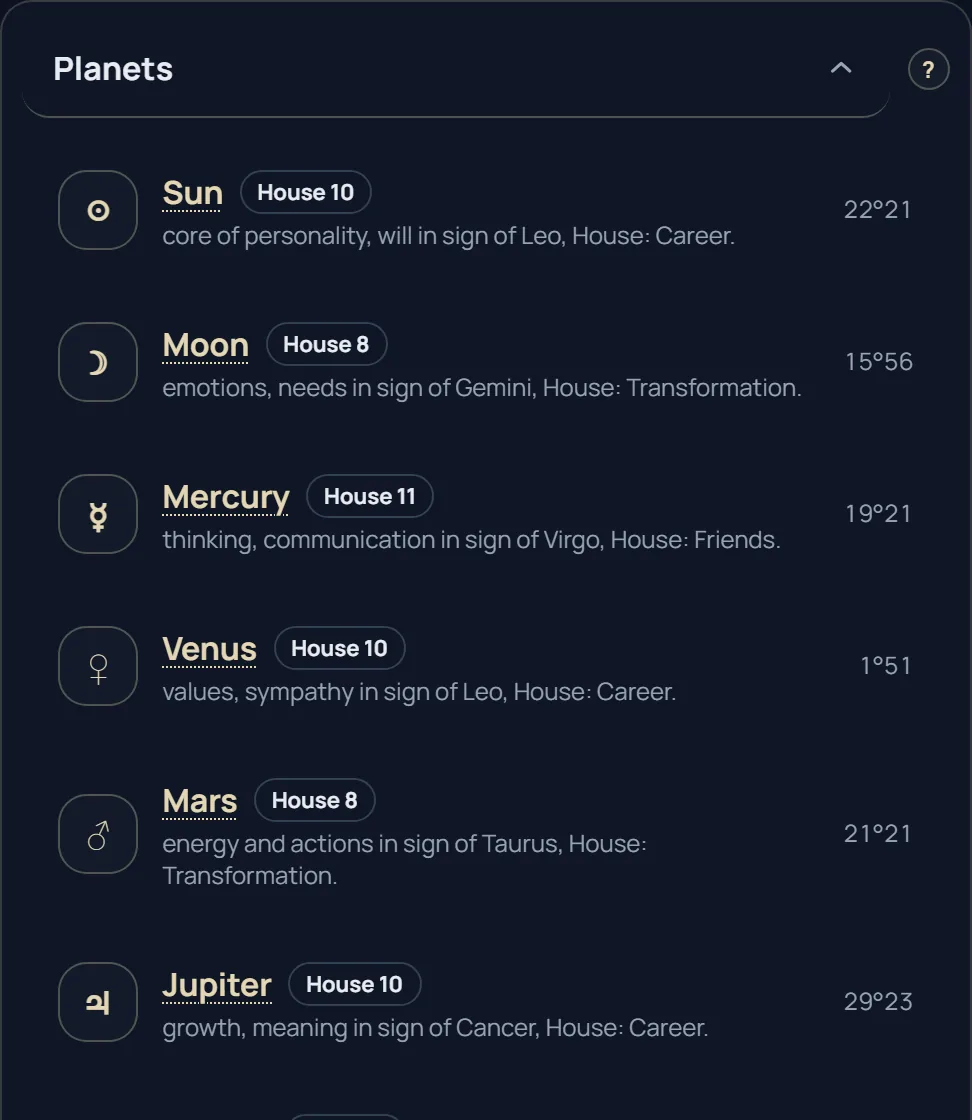
A practical way to read
Write down one concrete observation before reading an interpretation. Compare the text with both matching and nonmatching examples. Keep ideas that lead to useful questions and revise those that do not fit. Decisions about work, health and relationships still need evidence from those situations.