Sun sign astrology is the headline. A natal chart reading is the full article.
That difference explains most beginner confusion. People read a short Sun sign description, then hear about Moon signs, Rising signs, houses, and aspects, and assume astrology has become needlessly complicated. It has not. It has simply moved from one trait label to a working map.
The useful question is not whether the full chart is "better" in some abstract way. It is what each layer can and cannot explain. Once that is clear, reading a natal chart becomes much easier.
Sun sign astrology vs a natal chart reading
A Sun sign is based on the zodiac sign the Sun was in at birth. It points to core drive, identity style, and the way a person tends to organise effort and purpose. That is why Sun sign astrology often feels recognisable. It is describing a real part of the chart.
The problem is scope. The Sun is one factor, not the whole system.
A natal chart reading uses the full birth chart: planetary signs, houses, and the relationships between planets. That changes the reading from a broad personality sketch into something more specific. Instead of saying, "This sign is bold" or "That sign is cautious," a chart reading asks where that boldness shows up, what slows it down, what supports it, and which life areas carry the most weight.
A practical way to compare them:
- Sun sign astrology gives a general identity tone.
- A natal chart reading shows identity, emotional pattern, social presentation, pressure points, and life themes together.
That is why two people with the same Sun sign can behave very differently under stress, in relationships, or in career choices. The Sun stays the same, but the rest of the chart changes the expression.
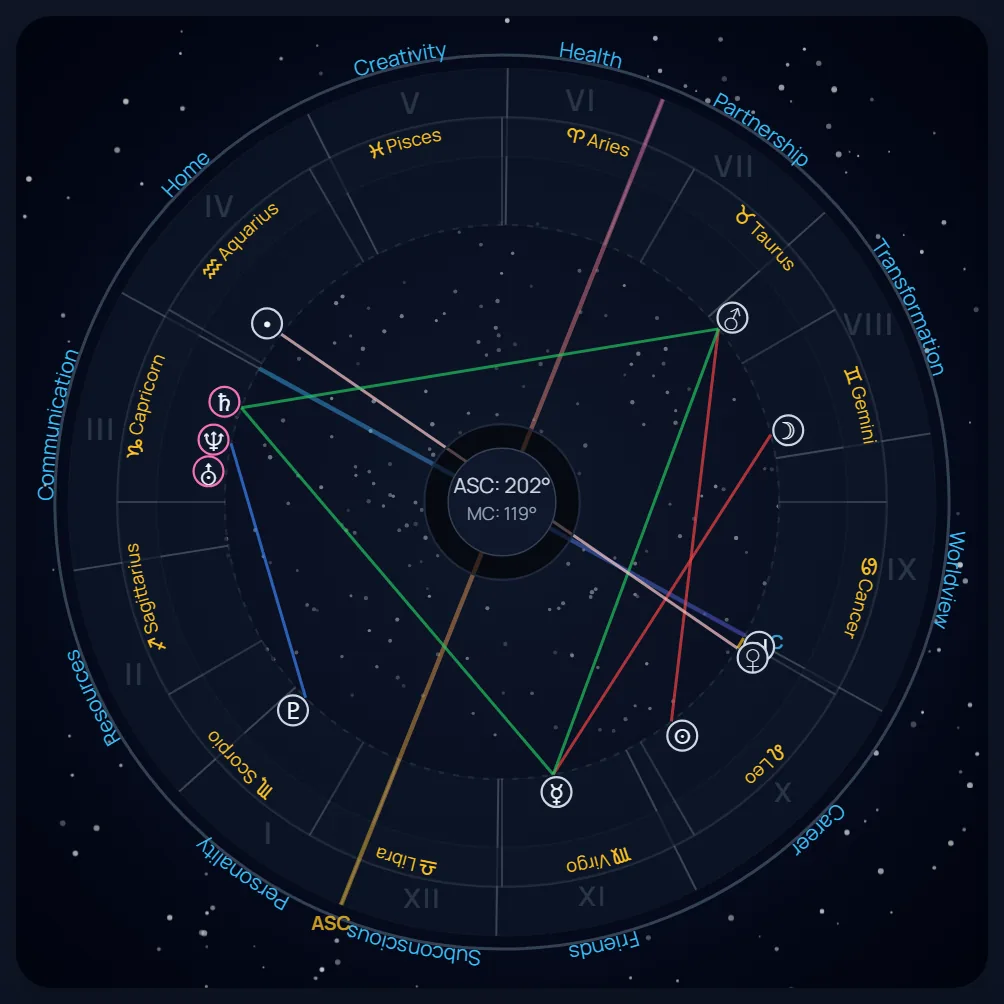
The Big Three vs the full chart
Beginners often hear that the Big Three are the "real" starting point: Sun, Moon, and Rising. That is mostly true. The Big Three give a usable baseline much faster than memorising every planet at once.
Here is the clean comparison.
The Sun: core drive
The Sun describes the style of being oneself. It is linked to confidence, direction, and the way a person wants to matter. In reading practice, the Sun helps explain what kind of effort feels meaningful rather than random.
The Moon: emotional pattern
The Moon describes instinctive responses, comfort needs, and how a person processes pressure. This is often where Sun sign astrology falls short. Someone may look direct and forceful in identity, but need privacy, routine, or reassurance emotionally. Without the Moon, that tension gets missed.
The Rising sign: outer approach
The Rising sign, or Ascendant, describes how someone enters situations, reads the environment, and gets interpreted by others. It is not just "the mask." It also shapes pace, first moves, and the style of engagement. In practice, it often explains why first impressions do not match the Sun sign stereotype.
What the Big Three still miss
The Big Three give a strong core snapshot, but not the full reading.
They do not fully answer:
- Which life topics become major themes
- Where conflict or ease shows up between different drives
- How communication, ambition, love, and boundaries operate in detail
- Why one area of life carries more urgency than another
That is where houses, other planets, and aspects matter.
Moon sign vs Rising sign: where beginners mix them up
This is one of the most common mistakes in birth chart basics.
People often use the Moon and Rising as if they mean the same thing because both can differ sharply from the Sun. They do not do the same job.
The Moon shows the inner reaction pattern. It becomes obvious in private habits, stress responses, and what helps someone settle.
The Rising sign shows the outer approach pattern. It becomes obvious in timing, body language, social entry style, and the way someone handles new situations.
A concrete reading use case helps.
Imagine a person who seems polished, measured, and controlled when meeting people, but becomes highly changeable or reassurance-seeking in close relationships. A beginner might call that inconsistency. A chart reader would separate functions:
- the Rising sign may describe the composed outer style
- the Moon may describe the shifting emotional response underneath
That distinction matters because it changes interpretation. One part describes presentation. The other describes regulation.
Big Three vs full chart: what changes in practice
The jump from Big Three to full natal chart is not about adding trivia. It is about moving from broad style to working structure.
1. Houses show where the pattern plays out
A sign tells you how energy tends to move. A house tells you where that movement becomes important.
That changes reading quality fast. Strong ambition means something different if it clusters around work, home, relationships, money, or learning. Without houses, a reading can sound accurate but vague.
For beginners, this is the first big step beyond personality keywords.
2. Aspects show tension and cooperation
Aspects are the angular relationships between planets. They show whether different parts of the chart support each other, compete, or create friction.
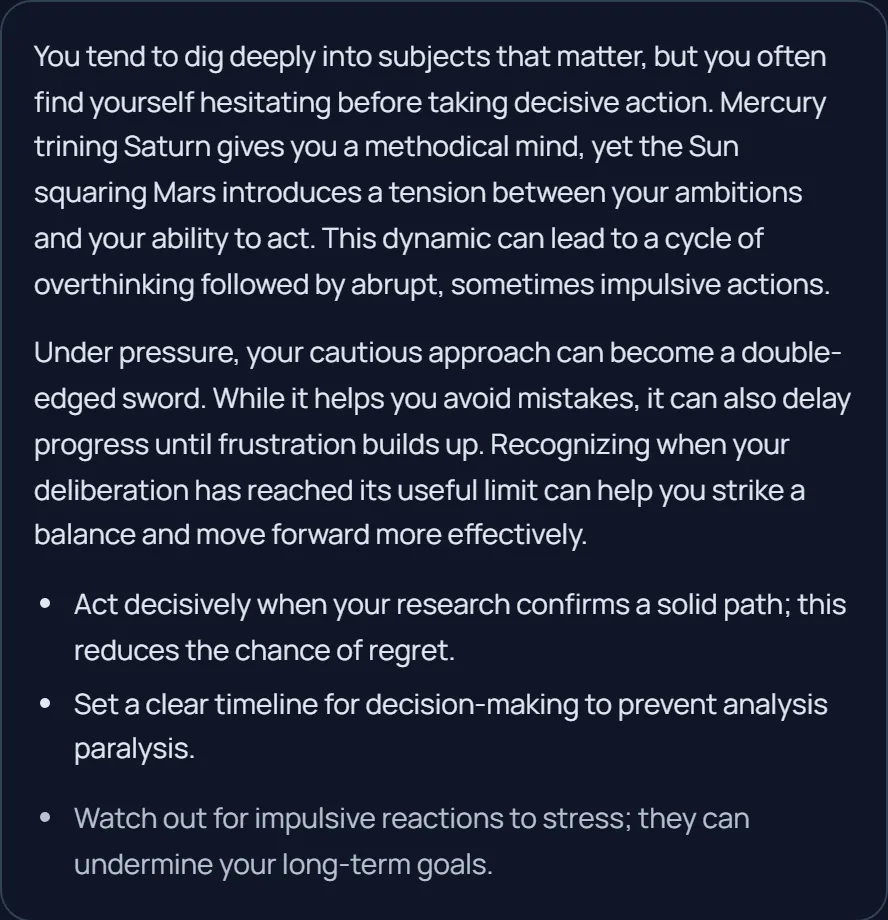
This is what often explains mixed behaviour. A person can be decisive in one setting and hesitant in another because two parts of the chart are pulling in different directions. Sun sign astrology usually flattens that into contradiction. A natal chart reading treats it as structure.
3. Other planets add function, not decoration
Mercury, Venus, Mars, Jupiter, Saturn, and the outer planets each handle specific areas of life. They are not extra detail for advanced readers only.
A few examples:
- Mercury changes how thinking and communication work
- Venus changes attraction, taste, and social ease
- Mars changes drive, conflict style, and how action gets taken
- Saturn changes pressure, delay, responsibility, and standards
If someone asks why a general Sun sign description feels incomplete, this is usually why.
What should a beginner read first in a natal chart?
Start with the Big Three, then add structure.
A simple reading order works better than trying to decode everything at once:
- Sun sign for core drive and identity tone
- Moon sign for emotional pattern and comfort needs
- Rising sign for outer style and first response to life
- House placements of the Sun, Moon, and Rising ruler for life focus
- Major aspects involving the Sun, Moon, Mercury, Venus, Mars, and Saturn
This order works because it answers the biggest beginner question first: "What am I looking at?" It gives a baseline style before adding complexity.
It also prevents a common mistake: collecting isolated meanings without understanding how they connect.
Sun sign descriptions vs life themes
Another beginner trap is treating astrology as a list of personality traits. A better reading asks about life themes.
Life themes are the repeated areas of attention, friction, effort, and growth visible in a chart. They do not predict a fixed outcome. They show where energy tends to organise itself.
That is an important contrast.
- Trait reading says someone is intense, sociable, cautious, restless, or idealistic.
- Theme reading asks where intensity keeps building, where social demands matter most, where caution slows decisions, or where restlessness pushes change.
A natal chart reading becomes more useful the moment it moves from labels to patterns with context.
Why a full chart can feel more personal than a Sun sign description
Adding contrast can make an astrological interpretation feel more specific. That feeling does not establish that it assesses personality more accurately.
A full chart can show that someone may:
- appear calm but process feelings quickly
- want stability but also provoke change
- think carefully yet act impulsively under pressure
- value connection while needing strong independence
That kind of layered reading sounds more realistic because people are layered. The chart does not erase contradiction. It organises it.
Sun sign astrology stays popular because it is simple and fast. A natal chart reading is useful because it explains why simple descriptions stop working after the first paragraph.
A practical beginner framework
If the goal is to understand birth chart basics without getting lost, use this comparison framework every time:
Ask of the Sun
What kind of purpose or self-expression feels central here?
Ask of the Moon
What does this chart need to feel steady under pressure?
Ask of the Rising sign
How does this chart approach people, situations, and change?
Ask of the houses
Which areas of life carry the most activity and importance?
Ask of the aspects
Which parts of the chart work together easily, and which create friction?
That sequence turns astrology from a pile of meanings into a readable structure.
FAQ
Is a natal chart reading more accurate than a Sun sign reading?
It includes more chart variables, so it can be more detailed within an astrological framework. That does not establish greater accuracy in measuring personality or predicting events. More specific wording and a stronger feeling of recognition are not scientific validation; treat the reading as symbolic interpretation and compare it with real evidence.
Is the Big Three enough for beginners?
Yes, for a strong start. The Big Three give a clear baseline. They are enough to understand the basic shape of a chart, but not enough to explain the full set of life themes.
What changes the interpretation beyond Sun sign astrology?
The biggest changes come from the Moon, Rising sign, house placements, and aspects. Those show how identity, emotion, behaviour, and life focus interact rather than standing alone.
What is the best first step in birth chart basics?
Read the Sun, Moon, and Rising together before moving to houses and aspects. That gives a stable base and prevents overly literal sign-by-sign interpretation.
Do you need the full chart to understand life direction?
For broad direction, the Sun and its house placement already help. For a fuller picture of long-term priorities, pressure, and repeating life patterns, the full natal chart is much more useful.
A Sun sign can start the conversation. A natal chart reading shows what the conversation is actually about.