Current transit analysis gets overcomplicated fast. A beginner opens an astrology app, sees ten symbols, three retrogrades, a moon phase, and a dramatic caption about transformation. None of that helps with the basic question: what deserves attention right now?
A useful transit reading is simpler than it looks. The goal is not to react to every planetary movement. The goal is to separate background weather from the few patterns that are actually shaping the tone of a week or month.
If the term is new, start with this foundation: a transit is the current movement of a planet or point in the sky, read as a timing layer. It does not stand alone. It describes emphasis, pressure, pacing, and themes. That makes transit astrology more useful as a reflection tool than as a prediction machine.
For a basic definition, see Planetary Transits Explained: What They Are and Why They Matter. This guide focuses on the next step: how to read current transits in a clean, practical way.
What current transit analysis actually means
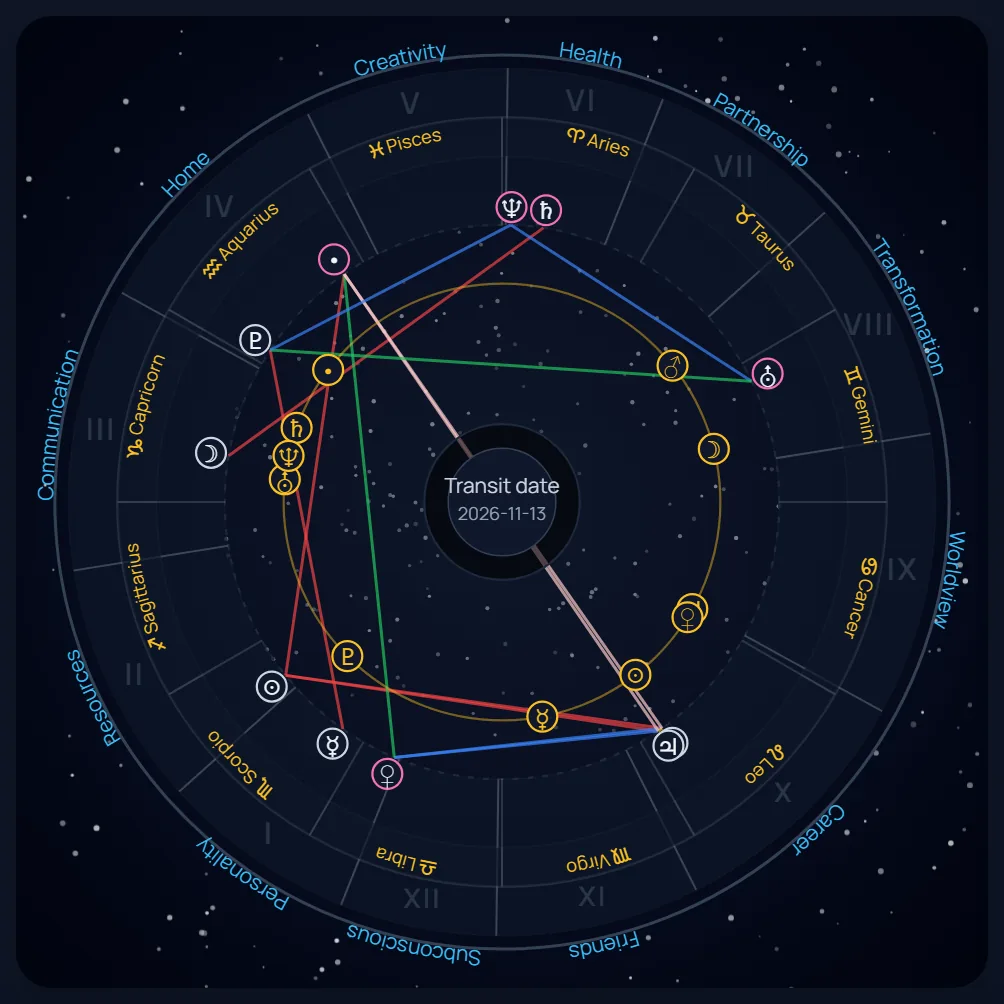
Current transit analysis means reading the sky as it is now rather than reading a birth chart by itself. In practice, that usually includes:
- the slow planets setting the larger tone
- the faster planets showing short-term mood and focus
- retrogrades changing pace, review, or clarity
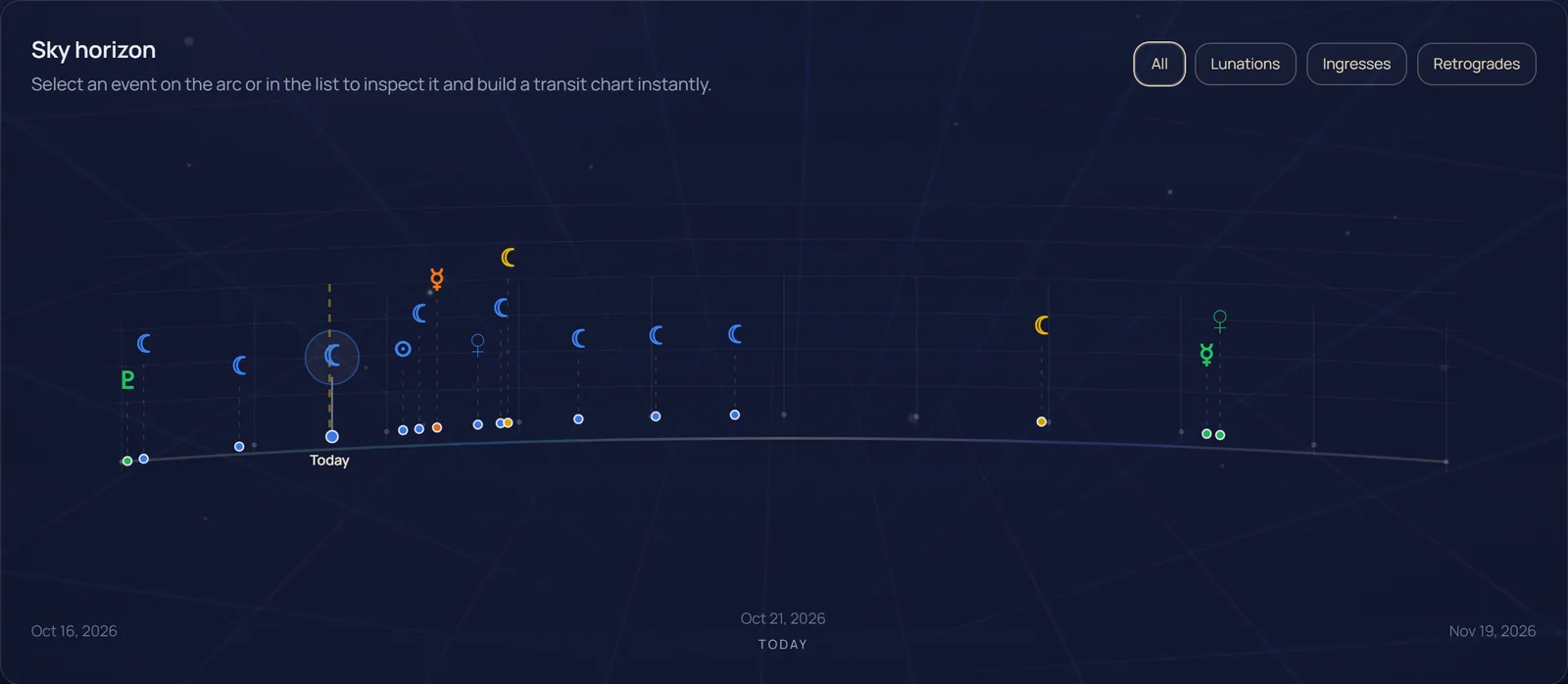
- lunations, meaning new moons and full moons, acting as timing markers
Think of it as layers.
A slow transit may describe a long stretch of restructuring, growth, or pressure. A faster transit may show when that theme becomes obvious in daily life. A lunation may bring a decision point, a reveal, or a shift in attention. None of these need to be dramatic to matter.
Which current transits deserve attention first
Beginners often make the same mistake: they treat every transit as equally important. They are not.
Use this order.
1. Start with the slow planets
Saturn, Jupiter, Uranus, Neptune, and Pluto tend to matter most in current transit analysis because they move slowly and stay in the same area of life for longer stretches.
That longer duration is why slow transits often feel like actual periods rather than brief moods.
A simple beginner framework:
- Saturn tends to highlight responsibility, limits, structure, pressure, or skill-building.
- Jupiter tends to highlight growth, confidence, opportunity, learning, or excess.
- Uranus tends to highlight disruption, experimentation, and the need for flexibility.
- Neptune tends to blur edges, increase imagination, and sometimes create confusion or idealization.
- Pluto tends to intensify power, control, endings, and deep change over time.
If only one transit gets your attention in a given week, make it a slow one.
2. Then look at retrogrades
Retrogrades are less about doom than about pace. When a planet appears to move backward from Earth, astrology reads that phase as more reflective, revision-oriented, or internally focused.
That does not mean life stops. It usually means the topic of that planet becomes less direct.
For example:
- a Mercury retrograde period may bring edits, repeated conversations, or crossed wires
- a Venus retrograde period may shift attention toward values, taste, spending, or relationship patterns
- a Mars retrograde period may slow momentum and expose friction around action, effort, or conflict
A retrograde is often most useful as a reading note: review before forcing progress.
3. Use lunations as timing markers
New moons and full moons help beginners because they create a visible rhythm.
A new moon usually works well as a marker for beginnings, intentions, or fresh attention. A full moon often acts more like culmination, exposure, contrast, or release.
The practical use is not to make a giant life decision because a moon phase exists. It is to watch what comes into focus around those periods. Lunations can show when a broader transit theme becomes easier to notice.
4. Save the fast transits for context
The Moon, Mercury, Venus, Mars, and the Sun can shift the daily tone quickly. They matter, but they are rarely the whole story.
Fast transits are best used to answer questions like:
- Why does this week feel busier than last week?
- Why is conversation more tense or more productive right now?
- Why does attention keep returning to one issue?
If a beginner starts with fast transits alone, the reading often turns into noise.
How to avoid daily horoscope noise
Daily horoscope content often treats every transit like a major event. That creates false urgency and weakens your reading skill.
A cleaner method is to ask four questions.
What is the background theme?
Look for one or two slow-planet stories. That is your base layer.
Example: if Saturn is the strongest pattern in the sky, the period may feel more serious, demanding, or structured. The useful question becomes: where is discipline required, and where is reality testing replacing wishful thinking?
What is changing the pace?
Check retrogrades and hard aspects from Mars or Mercury if the week feels delayed, tense, or messy.
This gives you a practical interpretation. Instead of saying everything is chaotic, you can say the pace favors correction, review, or more careful communication.
What is peaking this week?
Look at the nearest lunation or any repeating conversation between faster planets and a major slow transit.
This tells you what might become visible now, even if the actual theme has been building for months.
What is just passing weather?
Not every sharp mood swing needs a grand interpretation. Some transit signatures are brief. If a pattern lasts a day or two and does not connect to a larger theme, note it and move on.
That one habit protects beginners from overreading.
A simple weekly framework for reading current transits
If you want transit astrology for beginners to feel usable, read the week in this order.
Step 1: Name the central tone
Use one sentence only.
Examples:
- This week emphasizes structure and follow-through.
- This week feels socially open but mentally scattered.
- This week pushes review more than initiation.
If you cannot summarize the week in one line, you are probably tracking too many details.
Step 2: Choose one slow transit to watch
Pick the transit with the clearest practical theme.
If Saturn is prominent, watch for:
- deadlines n- friction with limits
- where effort must become consistent
- where avoidance stops working
That is the real beginner value of a Saturn transit meaning. It often shows where reality demands form, patience, or competence.
If Jupiter is more active, watch for:
- expansion of plans
- overpromising
- bigger conversations
- confidence that needs proportion
Step 3: Add one timing factor
Choose either a retrograde or a lunation.
This prevents overload while still giving you a real-time reading tool.
Examples:
- A Saturn-heavy week plus Mercury retrograde may point to revisions, delays, or stricter thinking.
- A Jupiter-heavy week plus a full moon may bring a peak in visibility, enthusiasm, or decision pressure.
Step 4: Translate the transit into behavior
This is where many astrology readings fail. They stop at symbolism.
A useful reading ends with observable behavior.
For example:
- Under Saturn, simplify the plan, define the deadline, and check what is sustainable.
- Under Jupiter, widen the horizon but question exaggeration.
- During a retrograde, reread, revise, and leave room for second passes.
- Around a full moon, watch what becomes obvious rather than forcing a conclusion too quickly.
That is how to read transits without turning them into superstition or vague mood poetry.
What actually changes when slow transits are active
Slow transits matter because they shape pattern, not just mood.
A fast transit might describe a tense afternoon. A slow transit can describe a season of life where the same issue keeps returning in different forms.
That repeated quality is the clue.
For example, a Saturn period may not produce one dramatic event. It may show up as repeated encounters with workload, boundaries, standards, or time pressure. Over months, the theme becomes unmistakable.
A Jupiter period may not instantly deliver success. It may increase options, scale, optimism, or appetite. That can feel productive, but it can also lead to overextension if not managed well.
The value of current transit analysis is that it helps a reader notice the pattern early. Not to predict a guaranteed outcome, but to work with the tone more consciously.
A practical example: reading a week without fluff
Here is a simple example of how a beginner might read a week.
Version one: noisy reading
- Mercury is active
- Mars is active
- the Moon changes sign
- Venus makes an aspect
- something is retrograde
- a full moon is coming
This sounds busy, but it tells you almost nothing.
Version two: useful reading
- The main background theme is Saturn, so the week favors realism, effort, and accountability.
- Mercury adds a review tone, so communication needs extra clarity.
- A lunation acts as a peak point, so something already developing may become easier to see.
Now the reading is usable.
The practical takeaway might be:
- tighten the plan
- reduce unnecessary commitments
- confirm details before reacting
- pay attention to what reaches a clear turning point
That is enough. A good transit reading does not need drama to be accurate or helpful.
Common beginner mistakes in transit astrology
Treating every transit as a prediction
Transits are better at describing themes, pressure, timing, and emphasis than at naming exact events.
Reading only the fastest planets
This creates emotional weather reports, not meaningful analysis.
Making retrogrades the villain
Retrogrades often help with revision, correction, and reflection. They are not automatically negative.
Ignoring pace
Some transits unfold over months. Others pass in hours. Good analysis respects duration.
Looking for certainty
Astrology can offer a framework for noticing patterns and making choices with more awareness. It is not a guarantee machine.
FAQ
How do I start reading current transits as a beginner?
Start with one slow planet, one timing factor, and one practical question. For example: what is the larger tone, what is changing the pace, and how should behavior adjust this week?
Which current transits matter most?
Slow planets usually matter most because they shape the longer theme. Retrogrades and lunations help you time when that theme becomes more visible.
What is the best way to use transit astrology without daily horoscope fluff?
Ignore the urge to interpret everything. Read the background first, then the weekly trigger, then the practical effect on attention, communication, workload, or timing.
What does a Saturn transit usually mean?
A Saturn transit often points to structure, limits, accountability, and long-term effort. In practical terms, it may highlight where better systems, stronger boundaries, or more patience are needed.
Are retrogrades always bad?
No. Retrogrades often slow direct progress, but they can support review, editing, reconnection, and course correction.
Can current transit analysis predict exact events?
It is better used to reflect on themes, timing, and patterns than to claim certainty about specific outcomes.
A better way to read the sky now
Current transit analysis becomes useful when you stop trying to track everything at once. Focus on the largest pattern, note the timing trigger, and translate symbolism into behavior.
That is the beginner framework that holds up: read the tone, read the pace, read the peak. Everything else is detail.