Partnership is the first place most readers look when they see Venus in the 7th house. That instinct makes sense, but the placement is easy to flatten into a slogan like “good at relationships” or “loves love.” A better reading asks a more precise question: how does Venus change the way closeness, agreement, attraction, and mutuality are handled?
That question keeps the interpretation practical. The 7th house is not just romance. It covers one-to-one relating more broadly: committed partners, dating patterns, collaboration, conflict style, and the tendency to define the self through another person. Venus brings ease, preference, taste, and the wish to connect. Put them together, and the result is usually a strong focus on relationship dynamics rather than a simple promise of harmony.
Start with the job of Venus and the job of the 7th house
Read the placement in two parts before you combine them.
Venus describes:
- how affection is expressed
- what feels attractive or pleasing
- the style of relating that seems natural
- the instinct to smooth, join, negotiate, or enjoy
The 7th house describes:
- close one-to-one bonds
- partnership habits
- what is sought through relationship
- the tension between cooperation and self-definition
Now combine them: Venus in the 7th house often points to a person who reads relationship through Venusian values such as fairness, attraction, reciprocity, charm, diplomacy, loyalty to the bond, or a preference for peace.
That does not mean every relationship is easy. It means relationship itself becomes a key place where Venus themes show up.
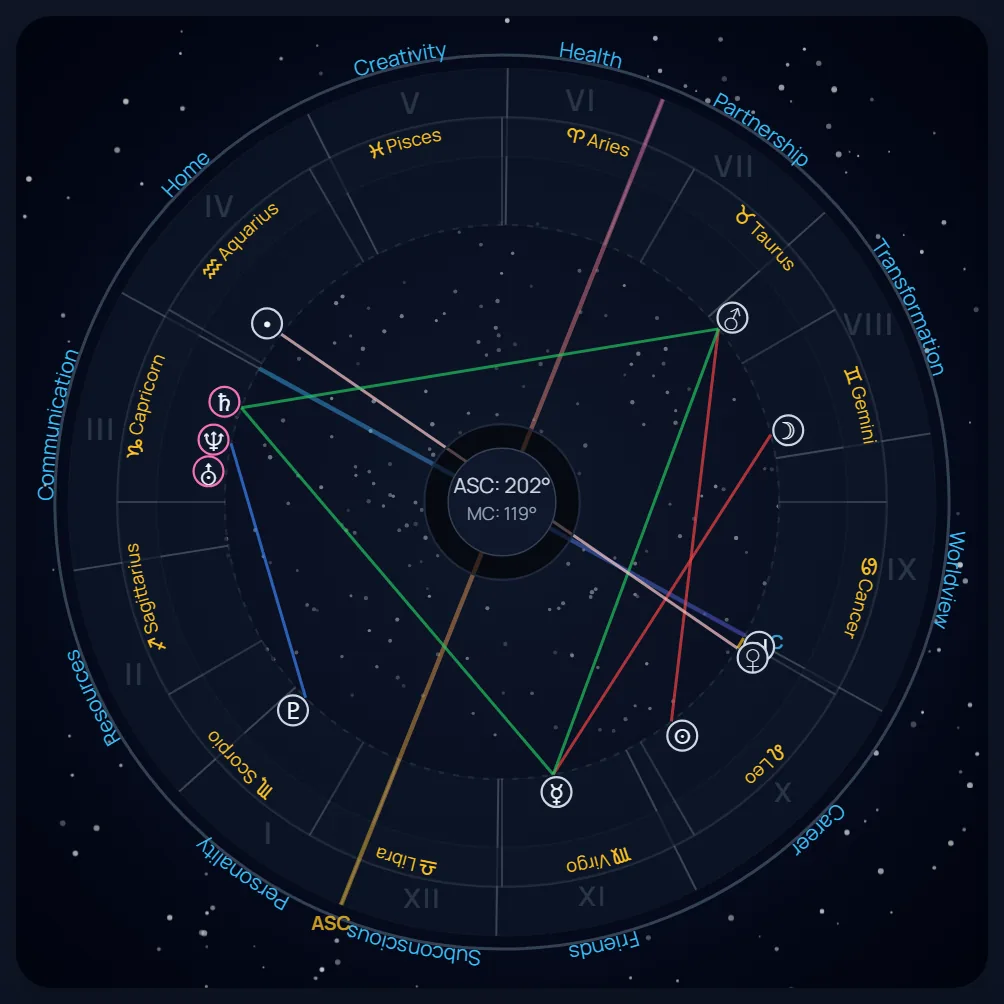
Step 1: Identify what Venus adds to seventh-house themes
When Venus lands in the 7th, it tends to add softness, responsiveness, and value-consciousness to partnership matters. In practice, that can show up in several ways.
1. A strong orientation toward partnership
This placement often gives weight to being in sync with another person. The bond matters. Mutual agreement matters. The quality of interaction matters.
A grounded reading would say: the person may notice partnership dynamics quickly, care about whether exchanges feel balanced, and put effort into keeping the relationship atmosphere workable.
That is different from saying they "need" a partner or that they are naturally compatible with everyone.
2. Attraction through relating itself
Sometimes the attraction pattern is not just about looks or status. It is about the experience of being met well.
Venus in the 7th can point to being drawn toward people who:
- know how to cooperate
- show social ease
- value fairness
- create a pleasant relational tone
- understand give-and-take
This is one reason the placement matters in compatibility astrology. It shifts attention from simple sign matching to how a person experiences connection in real interactions.
3. A diplomatic style that can help or hide
Venus often prefers tact over bluntness. In the 7th house, that can support strong mediation skills, but it can also lead to over-accommodation.
A careful reading asks: does the wish for harmony help the relationship function, or does it make honest conflict harder?
That is where the placement becomes interesting. Venus here may support grace in partnership, but it can also make someone stay on the surface too long if peace becomes more important than clarity.
Step 2: Read the placement through observable relationship patterns
To keep the interpretation concrete, move from symbol to behavior.
Ask these questions when reading Venus in 7th house:
- Is affection shown most clearly in one-to-one settings rather than in public or group contexts?
- Is there a strong instinct to pair up, check in, or seek mutual agreement?
- Does attraction grow through conversation, cooperation, and responsiveness?
- Is there skill around negotiation and reading another person's needs?
- Is there a habit of compromising too early just to keep things smooth?
These questions make the placement readable without turning it into a personality cliché.
Practical example: the early dating stage
A Venus-in-7th style may show interest by building rapport quickly, matching tone, creating shared plans, or making the interaction feel balanced.
The strength here is responsiveness.
The risk is adjusting so well to the other person that personal preference gets blurred. If every choice becomes “whatever works for us” too early, the relationship can look harmonious while key differences stay unspoken.
Practical example: conflict
In conflict, this placement may prefer calm discussion, repair, and finding a fair middle point.
That can be excellent for long-term relating.
It becomes less helpful when fairness gets confused with equal blame, or when discomfort with discord leads to avoiding the hard topic. The reading should include both potentials.
Step 3: Check the sign of Venus before making the final call
The house shows where Venus operates strongly. The sign shows how it does it.
This is one of the biggest factors that changes interpretation.
Venus in the 7th house will not read the same in every sign. The house can describe strong relationship focus, but the sign changes the style of affection, attraction, and negotiation.
For example:
- Venus in Aries in the 7th may seek closeness through directness, spark, and active engagement, not just peace.
- Venus in Taurus in the 7th may value steadiness, loyalty, and consistency in partnership.
- Venus in Gemini in the 7th may connect through conversation, curiosity, and mental movement.
- Venus in Scorpio in the 7th may approach closeness with more intensity, privacy, and all-or-nothing stakes.
So if the house says, “relationships are a central Venus arena,” the sign says, “this is the style that shows up there.”
Step 4: Read aspects to Venus to see what complicates the picture
If you stop at the placement alone, the reading stays too neat. Aspects tell you whether Venus operates easily, defensively, intensely, or with friction.
Look especially at contacts from:
Mars
Mars-Venus links can add chemistry, pursuit, friction, or a push-pull between ease and desire. In relationship readings, this often matters more than simple sign compatibility.
Saturn
Saturn can add caution, loyalty, restraint, fear of vulnerability, or a more serious approach to commitment. It may strengthen boundaries or make closeness feel weightier.
Uranus
Uranus can bring a stronger need for space, unpredictability, or a dislike of stale relational patterns. This changes a standard “partnership-oriented Venus” reading fast.
Neptune
Neptune can increase idealization, romance, softness, projection, or confusion around expectations. That does not make the placement bad. It means the reading needs sharper language around clarity.
Pluto
Pluto can intensify attachment, control dynamics, emotional stakes, or transformation through relationship. It pushes the interpretation beyond simple charm or ease.
A good rule: the 7th-house Venus describes relational focus; the aspects describe how smooth or complicated that focus feels in practice.
Step 5: Check the condition of the 7th-house ruler
This is where many beginner readings stop too soon. If Venus is in the 7th house, you still need to inspect the ruler of the 7th house sign.
Why? Because the ruler helps describe how partnership themes operate overall.
For example, if the 7th-house ruler is:
- in the 3rd house, communication may be central to relationship development
- in the 6th house, practical habits and daily support may shape partnership strongly
- in the 10th house, public roles, ambition, or visible commitments may matter more
- under pressure from Saturn or Mars, relationships may involve more tests, conflict, or structure than Venus alone suggests
This is one of the clearest answers to the question, which factors can change the interpretation? The sign of Venus matters, but the ruler of the 7th often matters just as much.
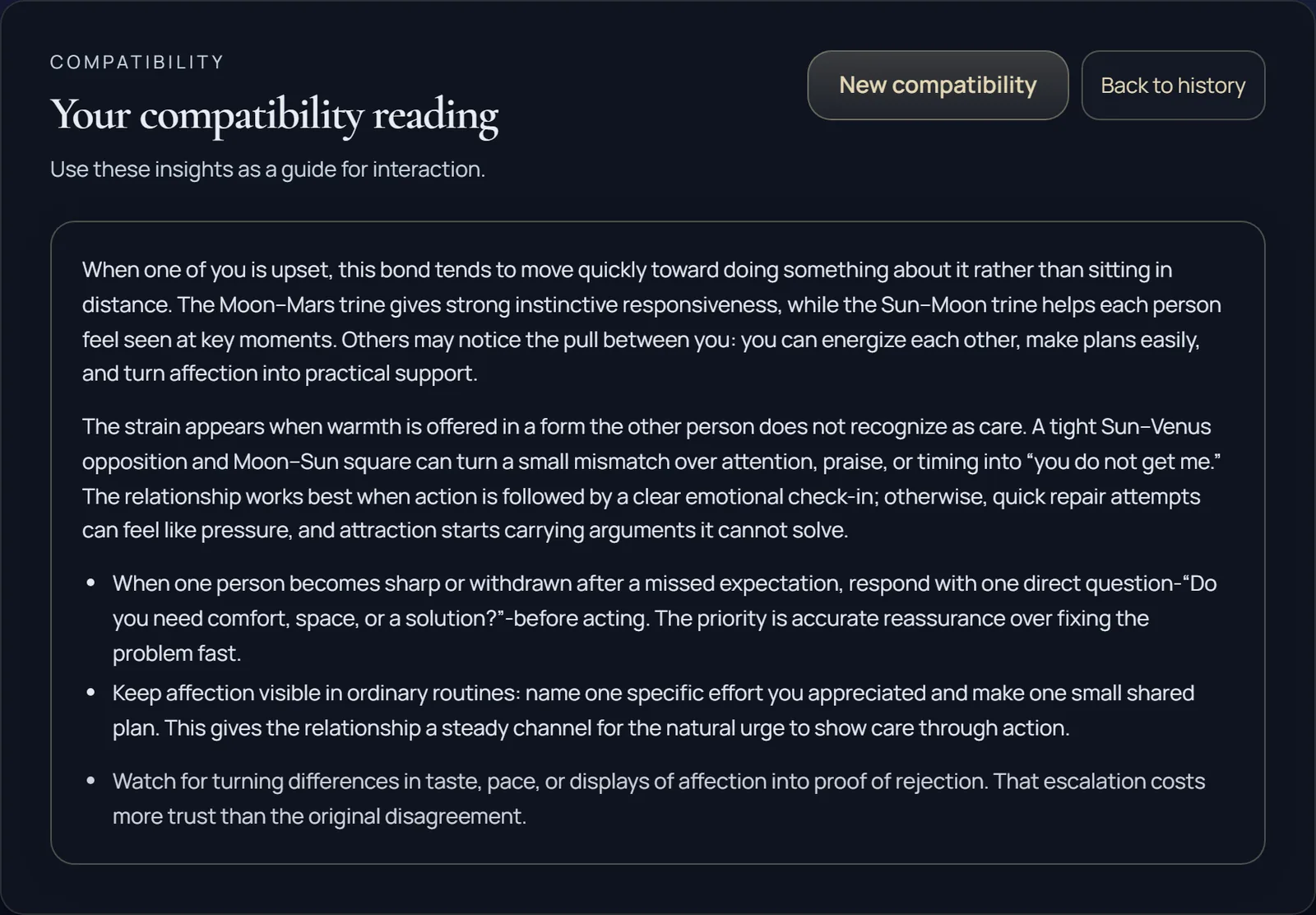
Step 6: Use boundaries as a reading checkpoint
Any 7th-house emphasis can lean hard into “us.” Venus can make that feel pleasant enough that the cost goes unnoticed.
So ask a boundary question every time:
Does the desire for connection support healthy reciprocity, or does it reward over-adjustment?
This is where the placement becomes useful for real relationship reflection.
Constructive Venus-in-7th expression can look like:
- warmth without self-erasure
- compromise without chronic self-editing
- tact without dishonesty
- loyalty without passivity
- receptivity without weak standards
Less balanced expression can look like:
- saying yes too quickly
- defining success by being chosen
- avoiding direct disagreement
- confusing chemistry with compatibility
- staying agreeable to preserve the bond at any cost
That distinction helps astrology describe relationship dynamics without turning generic. It ties the symbol to actual decisions.
Step 7: Keep compatibility reading focused on dynamics, not labels
When readers search love astrology, they often want a fast answer about who fits. The better use of the chart is slower and more precise.
For Venus in the 7th house, useful compatibility questions include:
- Does the other person respond well to cooperation, or exploit it?
- Is there room for preference, or does one partner set the tone for both?
- Does attraction grow with fairness and consistency, or mainly with excitement and pursuit?
- Are conflict styles compatible enough to repair tension?
- Do both people value reciprocity in similar ways?
Those questions usually tell you more than broad sign matching.
For a wider framework, see Relationship Astrology for Beginners: How to Read Compatibility Beyond Sun Signs.
A simple step-by-step reading formula
Use this sequence when reading the placement quickly but well:
- Name the house theme. The 7th house points to one-to-one bonds, partnership habits, and mutuality.
- Name the planet's job. Venus adds attraction, affection, preference, harmony, and relational style.
- Combine them plainly. Venus themes become prominent in close relationships.
- Check the sign. This shows the style of love, taste, and relating.
- Check major aspects. They show whether Venus is supported, pressured, intensified, or unsettled.
- Check the 7th-house ruler. This adds context about how relationships function overall.
- Translate into behavior. Look for patterns in attraction, conflict, compromise, and boundaries.
- Avoid outcome claims. Read tendencies and pressures, not guarantees.
That formula keeps the interpretation flexible, specific, and useful.
What this placement does not mean
A clean reading also includes limits.
Venus in the 7th house does not automatically mean:
- easy relationships
- marriage success
- perfect diplomacy
- universal likability
- better compatibility with everyone
It usually means that relationship is an important stage for Venus themes to play out. Whether that becomes satisfying, draining, steady, complicated, or growth-producing depends on the rest of the chart and on lived choices.
FAQ
Does Venus in the 7th house mean someone is relationship-oriented?
Often, yes. It can point to strong attention to partnership, mutuality, and the quality of one-to-one dynamics. That is not the same as saying a person always wants a relationship or thrives in every one.
What does Venus add to seventh-house themes?
Venus adds attraction, diplomacy, preference, pleasure, and the wish to connect. In the 7th house, those qualities often become especially visible in close relationships, dating patterns, collaboration, and conflict repair.
Which factors change the interpretation most?
The biggest modifiers are the sign of Venus, major aspects to Venus, and the ruler of the 7th house. Those factors usually matter more than a one-line textbook meaning.
Is Venus in the 7th house enough for compatibility analysis?
No. It is one useful piece in compatibility astrology, but it does not replace the full chart, synastry, communication patterns, values, and boundaries.
Which natal markers matter more than simple sign compatibility?
Venus, Mars, the Moon, the 7th house, its ruler, and major aspects often tell you more about relationship dynamics than Sun-sign matching alone. They show how attraction works, how safety is built, and how friction gets handled.
Final reading takeaway
The cleanest way to read venus seventh house is to treat it as a relationship filter, not a verdict. Venus brings its values into the 7th-house arena: attraction, reciprocity, style, agreement, and the wish for a bond that feels good to be in.
The real interpretation begins when you ask how that plays out under pressure. Does it create steady mutuality? Does it avoid conflict? Does it sharpen fairness? Does it blur boundaries?
That is where the placement stops being generic and starts becoming readable.