A Saturn in the 10th house reading is most useful when it stays concrete. Start with work style, pressure, responsibility, and pace. Leave career titles and status fantasies out of it.
This placement is often discussed as if it guarantees success, struggle, authority, or a difficult boss. That is not a useful way to read it. A better reading asks simpler questions: How does a person approach responsibility? What kind of pressure sharpens performance, and what kind shuts it down? Where does progress come through steady effort rather than fast results?
That is where Saturn in the 10th house becomes practical.
What Saturn in the 10th house points to
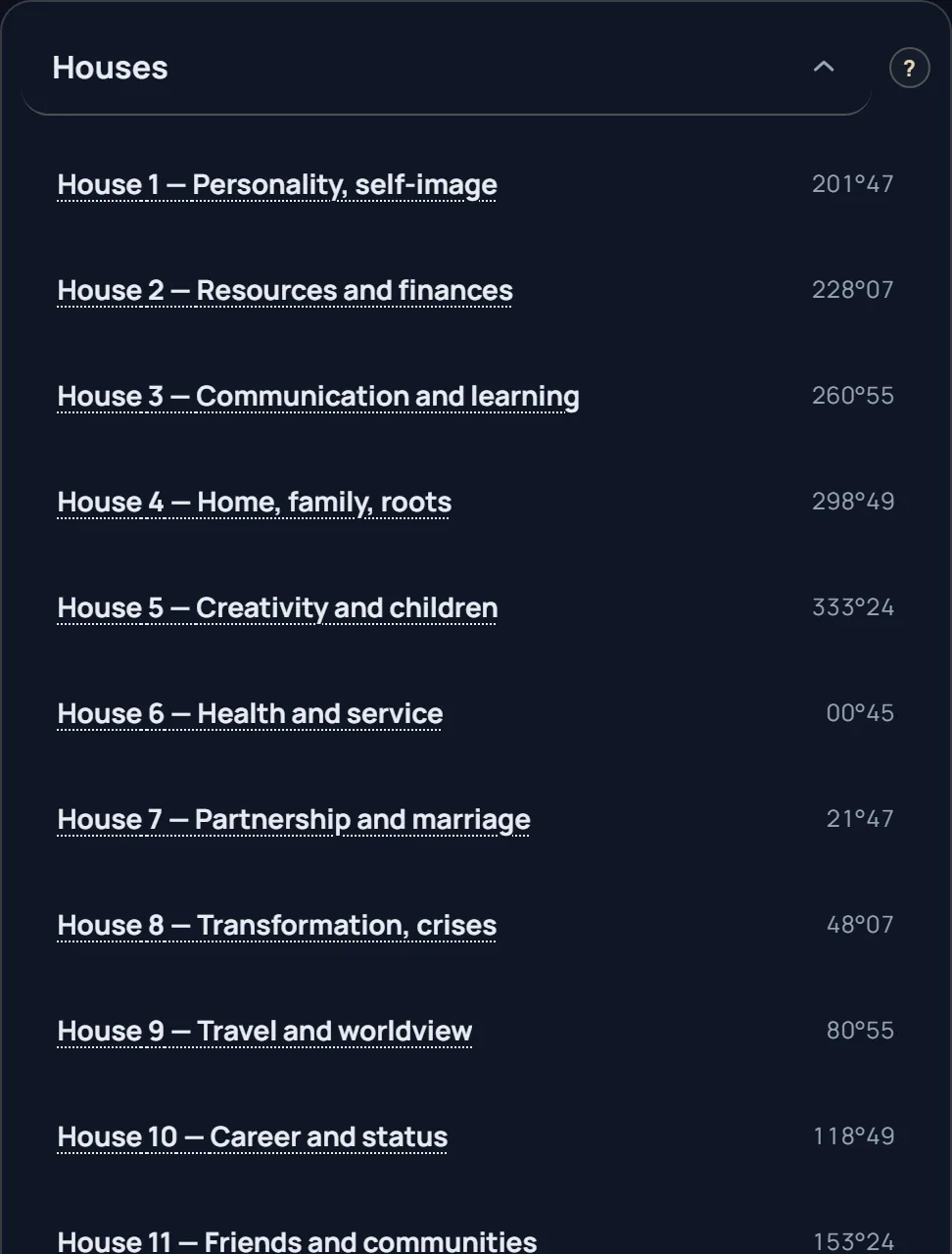
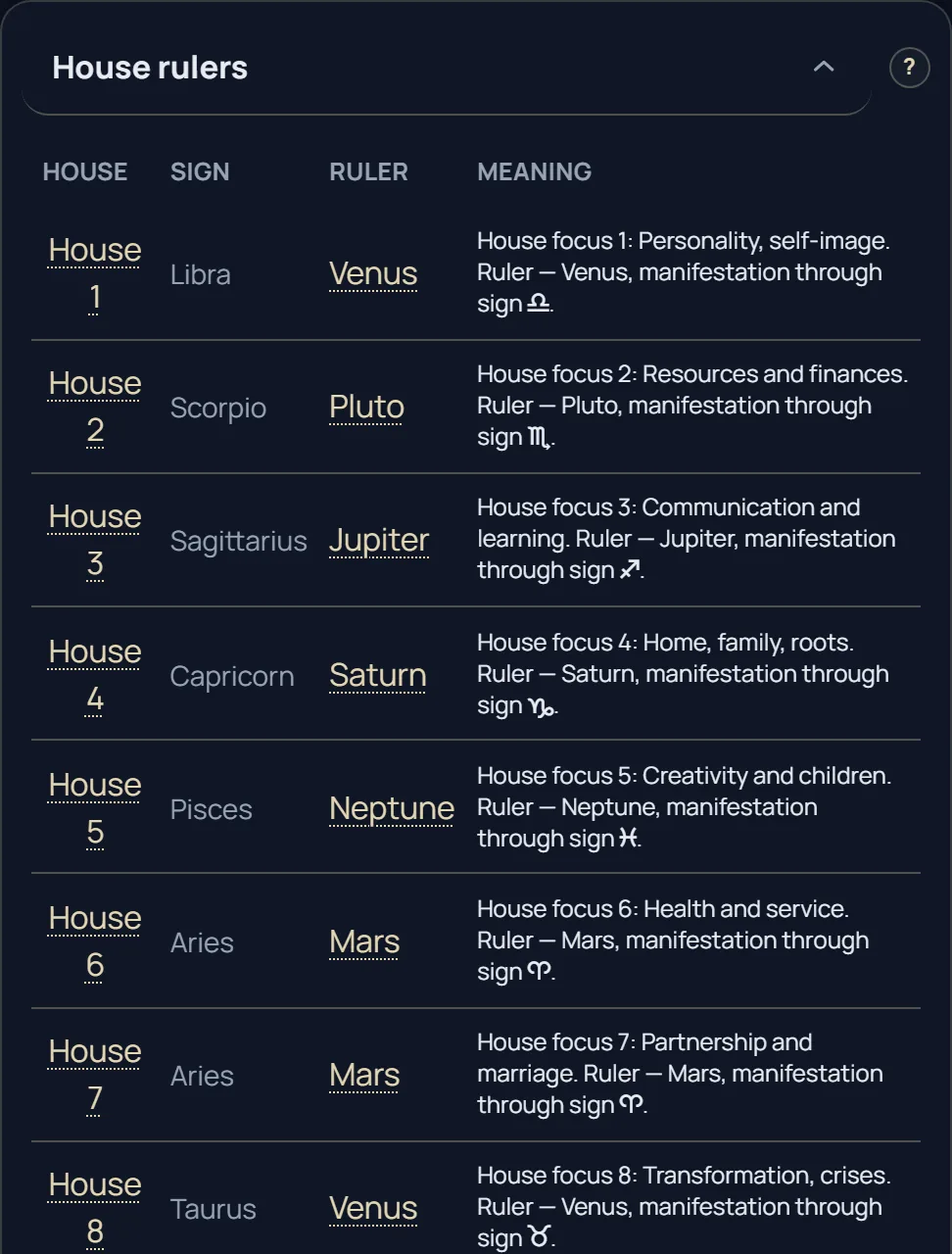
The 10th house deals with public responsibility, visible work, reputation, and the structures that shape long-term direction. Saturn brings discipline, limits, standards, caution, and the need to build something that can hold weight over time.
Put together, this placement can describe a work pattern where public responsibility feels serious. Effort is often tied to proof, competence, and durability. The person may measure progress carefully, take duties heavily, or feel that work must justify itself through results.
That does not automatically mean ambition in a loud or conventional sense. It can also show up as:
- a careful approach to promotion or visibility
- high internal standards around competence
- slow trust in authority, including personal authority
- reluctance to claim expertise too early
- a preference for work that has structure and clear accountability
The key is not "What career will happen?" The key is "How is responsibility handled when work becomes visible?"
A step-by-step way to read this placement
Step 1: Read Saturn as a style of effort, not a fate marker
Saturn is easiest to misread when it gets turned into doom or reward. For practical reading, treat it as a style of effort.
With Saturn in the 10th house, effort tends to become serious when work is exposed to judgment. Deadlines, public stakes, leadership, performance reviews, and long-term goals can all bring Saturn themes into focus.
Ask:
- Does pressure improve discipline or create paralysis?
- Is work approached cautiously, methodically, or defensively?
- Is there a need to feel fully prepared before taking a visible step?
- Does progress happen through repetition and consistency rather than bold leaps?
This turns the placement into an observable pattern. That is much more useful than calling it "good" or "bad."
Practical example
Two people can both have this placement and use it differently.
One may thrive in roles where expectations are clear, success is measurable, and seniority is earned over time.
Another may resist visibility for years, not because they lack skill, but because they attach public work to heavy self-judgment.
Same placement, different expression. The reading should stay focused on behavior and decision patterns.
Step 2: Read the 10th house as public responsibility, not just career status
A common mistake is reducing the 10th house to job title. That is too narrow.
The 10th house covers how a person relates to responsibility that can be seen, evaluated, or remembered. Career is one part of that. So are leadership, credibility, and the standards attached to visible work.
For Saturn here, ask:
- What kind of responsibility feels weighty?
- Where is there caution about reputation?
- What makes work feel legitimate?
- How much importance is placed on being respected for competence?
This helps clarify why some readers with this placement are not obsessed with status at all. They may simply need work to feel solid, earned, and defensible.
Step 3: Look for the core tension between pace and pressure
Saturn often works through delayed confidence, strict pacing, or a strong awareness of consequences. In the 10th house, that can create a specific tension: the desire to build something real versus the fear of moving before it is ready.
This is where the placement becomes useful for career direction. It may help a reader notice whether work decisions are being shaped by sound patience or by over-control.
Read for signs such as:
- taking on too much because responsibility feels morally loaded
- underplaying achievements until they are impossible to deny
- moving slowly in public career decisions even when private preparation is strong
- staying in rigid structures longer than necessary because they feel safe
The point is not to force speed. The point is to tell the difference between mature pacing and stalled pacing.
Step 4: Translate the placement into work habits
A good natal placement reading should produce practical observations. Saturn in the 10th house often becomes clear through repeatable work habits.
Possible strengths:
- consistency under long timelines
- seriousness about quality control
- respect for process
- willingness to learn through responsibility
- endurance in structured environments
Possible friction points:
- fear of being seen as unqualified
- difficulty relaxing standards once a task is good enough
- over-identifying with work performance
- rigid ideas about what counts as respectable work
- discomfort with messy, unstructured growth phases
This is where career astrology becomes useful to a practical reader. It can offer a reflection framework for habits that already show up in real work life.
Step 5: Use Saturn to narrow career direction realistically
A natal chart cannot hand over one correct profession. It can help sort work environments, pressure styles, and growth rhythms.
For Saturn in the 10th house, career direction becomes clearer when you ask what kind of structure supports durable performance.
Useful filters include:
- Does the role reward steady competence over constant self-promotion?
- Are expectations clear enough to work toward mastery?
- Is responsibility matched by authority, or just piled on?
- Does the environment respect time, process, and long-term skill building?
- Is the pace demanding in a productive way, or only draining?
These questions help separate jobs that look impressive from jobs that are actually sustainable.
Example: reading for fit, not prediction
A person may be choosing between a fast-moving startup role and a slower institutional role. Saturn in the 10th house does not automatically say one is right.
But it does suggest what to evaluate:
- Which role has clearer accountability?
- Which role gives effort a stable structure?
- Which role supports gradual authority instead of constant improvisation?
- Which role turns responsibility into growth rather than chronic strain?
That is a real reading use case. It helps with decisions without pretending the chart can forecast a job outcome.
Step 6: Bring money into the reading through responsibility, not luck
For money topics, Saturn in the 10th house is best read through earning style, professional credibility, and long-term structure.
That can mean:
- taking income seriously because work and self-respect are closely linked
- preferring predictable growth over risky leaps
- wanting financial choices to make practical sense
- tying money decisions to long-range goals or obligations
This is not a sign of guaranteed wealth or scarcity. It is a clue about how money pressure may be processed through work responsibility.
A practical reading asks:
- Is income being used to support a stable structure?
- Is caution around money helping with discipline, or blocking necessary career moves?
- Does financial decision-making become too rigid when professional pressure rises?
That keeps the interpretation grounded.
Step 7: Check whether Saturn is being used defensively or constructively
This is often the most important step.
Constructive Saturn in the 10th house can look like patience, accountability, earned confidence, and strong professional boundaries.
Defensive Saturn can look like chronic self-monitoring, reluctance to be visible, excessive caution, or carrying responsibility as proof of worth.
The difference matters.
When reading this placement, look at the pattern around authority:
- Is authority respected because it creates order?
- Distrusted because it feels harsh?
- Avoided because being answerable feels heavy?
- Sought because external validation feels safer than internal confidence?
These patterns often reveal more than broad career labels do.
How Saturn in the 10th house differs from simple ambition
This placement is often flattened into "career-driven." That misses the point.
Saturn here can describe someone who wants work to matter, hold up, and withstand scrutiny. That is not always the same as chasing status. In many cases, the deeper issue is legitimacy.
Questions about legitimacy sound like:
- Have I earned the right to lead?
- Is this work solid enough to attach my name to?
- Am I building something stable or just reacting to pressure?
- Do I want responsibility, or do I only feel unable to refuse it?
Those are Saturn in the 10th house questions. They are much sharper than vague statements about success.
How to combine this placement with timing without making predictions
Natal placements describe a baseline pattern. Timing techniques can show when that pattern becomes louder, but they do not remove uncertainty.
For example, periods linked with Saturn can intensify lessons around structure, accountability, and limits. Periods linked with Jupiter can expand visibility, opportunity, or confidence. The practical use is not prediction. It is better decision-making under changing conditions.
If timing is the next layer you want to explore, these guides can help:
- Birth Chart Career Timing: What to Notice When Work or Money Starts Shifting
- How to Read Career Astrology for Clear Work and Money Decisions
A quick reading checklist
Use this checklist when reading Saturn in the 10th house:
- Identify how responsibility is experienced at work.
- Notice whether public visibility increases discipline or self-criticism.
- Assess pace: steady, delayed, blocked, or over-controlled.
- Translate the placement into actual work habits.
- Compare career options by structure, accountability, and sustainability.
- Bring money questions back to earning style and long-term stability.
- Separate constructive maturity from defensive caution.
That is enough to make the placement useful without making it grand.
FAQ
Does Saturn in the 10th house mean career success comes late?
Not in any guaranteed sense. A better reading is that professional confidence, authority, or visible responsibility may develop through time, effort, and experience rather than quick recognition.
Can Saturn in the 10th house explain difficult work habits?
It can offer a framework for noticing habits like over-preparing, carrying too much responsibility, or tying self-worth too tightly to performance. It should not be used as a fixed excuse or a verdict.
Is this placement bad for money?
No. It is more useful to read it as a style of handling work and financial pressure. It may support caution, planning, and long-range thinking, though in some cases it can also show rigidity or fear around risk.
What is the most practical use of this placement in career astrology?
Use it to judge fit. Look at pace, expectations, responsibility, and the kind of structure needed for durable work. That is usually more helpful than trying to name one perfect career.
Can a natal chart clarify work direction without becoming vague?
Yes, if the reading stays focused on observable patterns: decision pressure, work habits, tolerance for uncertainty, and the conditions that support steady performance. Saturn in the 10th house is especially useful for that kind of reading.
Saturn in the 10th house is not a promise about where someone ends up. It is a lens on how responsibility, credibility, and work pressure are handled over time. Read that clearly, and the placement becomes far more useful than any simple prediction.