Career astrology is most useful when it helps narrow choices. It works best as a reading tool for patterns: where effort tends to compound, what kind of work pressure repeats, and when growth or responsibility becomes harder to ignore.
Used well, it does not replace judgment. It gives structure to questions that otherwise stay vague, such as: Why does one type of job drain energy fast? Why does money improve when work is more visible? Why does a stable role feel heavy at one stage and necessary at another?
The practical way to read career astrology is to combine two layers:
- the natal chart for long-term work and money patterns
- current transits for timing, pressure, and openings
That keeps the reading grounded. The natal chart shows the baseline. Saturn shows where maturity is being demanded. Jupiter shows where growth is easier to spot or test.
Start with the reading question, not the whole chart
A useful reading begins with one concrete question. Broad questions create broad answers.
Better questions look like this:
- What kind of work structure helps effort turn into results?
- Is the current pressure about skill, authority, money, or patience?
- Where is growth happening now, and is it actually useful?
- What is the difference between a real opportunity and simple overextension?
This matters because career astrology can become vague very fast. If the question is "What career is right?" the reading often turns into a pile of traits. If the question is "What work environment helps steady income and sustainable effort?" the chart becomes easier to use.
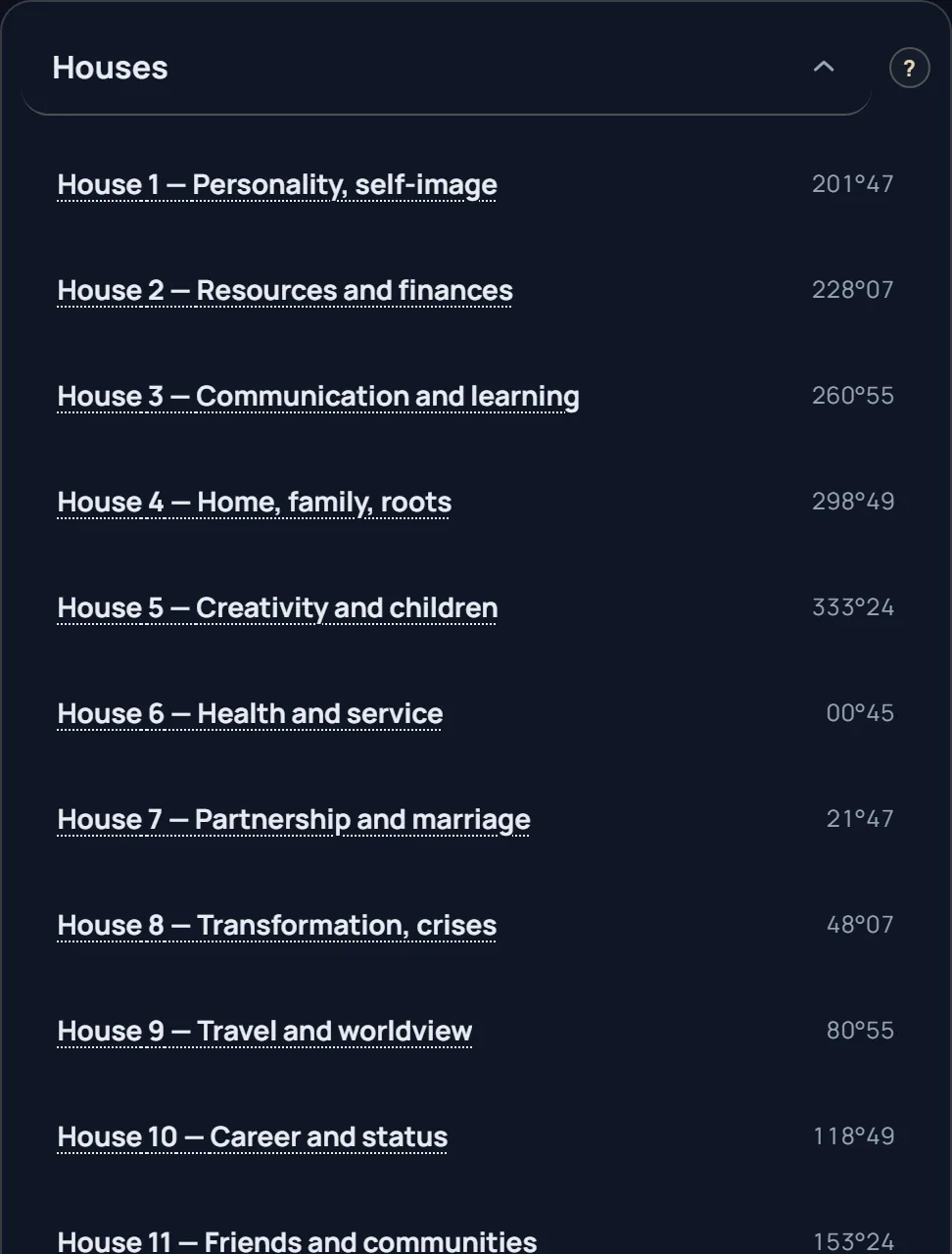
Read the natal chart for work direction first
For birth chart career reading, start with long-term indicators before looking at timing. The goal is not to find one perfect profession. The goal is to identify how work tends to function best.
Focus on four practical areas:
1. Where ambition wants expression
Look at the part of the chart linked with public life, responsibility, and visible achievement. This often describes what kind of role demands growth over time.
Read it in plain language:
- Is the career path built through independence or through institutions?
- Does progress come from specialization, management, public trust, technical skill, or communication?
- Is there a need for measurable status, or is autonomy the real motivator?
This is useful because many work problems are not talent problems. They are fit problems. Someone can perform well in a role that still clashes with how ambition naturally organizes itself.
2. Where effort becomes practical results
Next, look for the area of the chart that shows routine effort, craft, and how work gets done in daily life. This is often more revealing than prestige indicators.
Ask:
- Is progress built through consistency, problem-solving, service, analysis, speed, or relationship management?
- Does the chart emphasize depth over volume, or range over specialization?
- What kind of work rhythm looks sustainable rather than impressive for three months?
A simple reading use case: if strong career themes point toward leadership but daily-work indicators show a need for careful process and quiet focus, the best path may not be a highly reactive management role. Leadership may still fit, but in a system with planning time, clear boundaries, and fewer interruptions.
3. Money habits and financial behavior
Money astrology is not just about income potential. It is also about behavior around security, risk, spending, and value.
Read the chart for patterns such as:
- preferring steady accumulation over sudden gains
- earning more through collaboration or through self-direction
- underpricing work due to caution or overpromising due to optimism
- treating money as safety, freedom, status, or proof
This is where astrology becomes practical. Two people can earn the same amount and still have very different financial outcomes because their money behavior differs. A chart cannot set a salary. It can highlight recurring blind spots around timing, confidence, restraint, and overreach.
4. Tension between work identity and money reality
Many career decisions become clearer when the chart is read for conflict, not just strengths.
Common patterns include:
- strong drive for meaningful work but weak tolerance for unstable income
- clear earning potential but resistance to hierarchy
- ambition for status with a work style that prefers privacy or autonomy
- talent for service roles with frustration around low recognition
This kind of contrast is often where the reading becomes useful. It shows why a decision feels split. The issue may not be confusion. It may be two valid priorities pulling in different directions.
Use Saturn to read pressure, delay, and necessary skill-building
After the natal baseline, look at Saturn. In career astrology, Saturn is rarely glamorous, but it is often the clearest signal of what must be taken seriously.
Saturn periods tend to concentrate pressure. That pressure may show up as:
- more responsibility without immediate reward
- a need to tighten money habits
- exposure of weak systems or weak boundaries
- frustration with slow progress
- authority issues, either with bosses or with self-trust
The practical reading question is not "Is Saturn bad?" It is: what is being tested for durability?
Read Saturn in three steps:
Step 1: Name the pressure plainly
Is the problem about time management, qualifications, consistency, debt, fear of visibility, or refusal to commit?
Saturn often strips away flattering stories. If a role is not sustainable, Saturn tends to make that obvious. If a skill gap has been ignored, Saturn makes it expensive to ignore further.
Step 2: Separate delay from misalignment
Not every slow period means the path is wrong. Sometimes a path is right but requires stronger structure.
For example:
- A business idea may be viable but need pricing discipline.
- A promotion track may fit but require better management of conflict.
- A creative career may be possible but only with stronger financial planning.
This is one of the most useful distinctions in a birth chart career reading. Saturn helps tell the difference between "no" and "not like this."
Step 3: Ask what maturity looks like in behavior
A good Saturn reading ends with action, not mood.
Examples:
- build a six-month savings buffer before changing jobs
- get a certification instead of staying in abstract self-doubt
- reduce undercharging by setting non-negotiable pricing rules
- create weekly review systems to track output and spending
That is how Saturn becomes practical. It rewards structure more than confidence.
Use Jupiter to read openings without overreading them
Jupiter is the part many readers want to rush to. It can describe expansion, support, visibility, and growth. But practical reading matters here too, because not every opening is useful, and not every gain is sustainable.
Jupiter is best read as a window for enlargement. It can increase reach, optimism, learning, and access. It can also increase excess.
Read Jupiter with restraint:
Step 1: Identify where more is available
Ask what is expanding now:
- network reach
- client flow
- learning and credentials
- confidence in asking for more
- travel or relocation options tied to work
- broader exposure to markets or audiences
Step 2: Check whether the opening matches the natal pattern
An opportunity is not automatically a fit. If Jupiter brings more attention but the underlying work system is chaotic, growth may create more stress than progress.
A useful reading asks:
- Does this opening support the long-term career direction already shown in the chart?
- Does it improve income quality, or just increase activity?
- Is this expansion building something, or distracting from what already works?
Step 3: Watch for exaggeration
Jupiter can improve results, but it can also inflate assumptions.
Watch for patterns like:
- saying yes too quickly
- mistaking momentum for stability
- spending ahead of actual income growth
- taking on too many projects because confidence is high
The best use of Jupiter is selective expansion. Pick the opening that increases both growth and coherence.
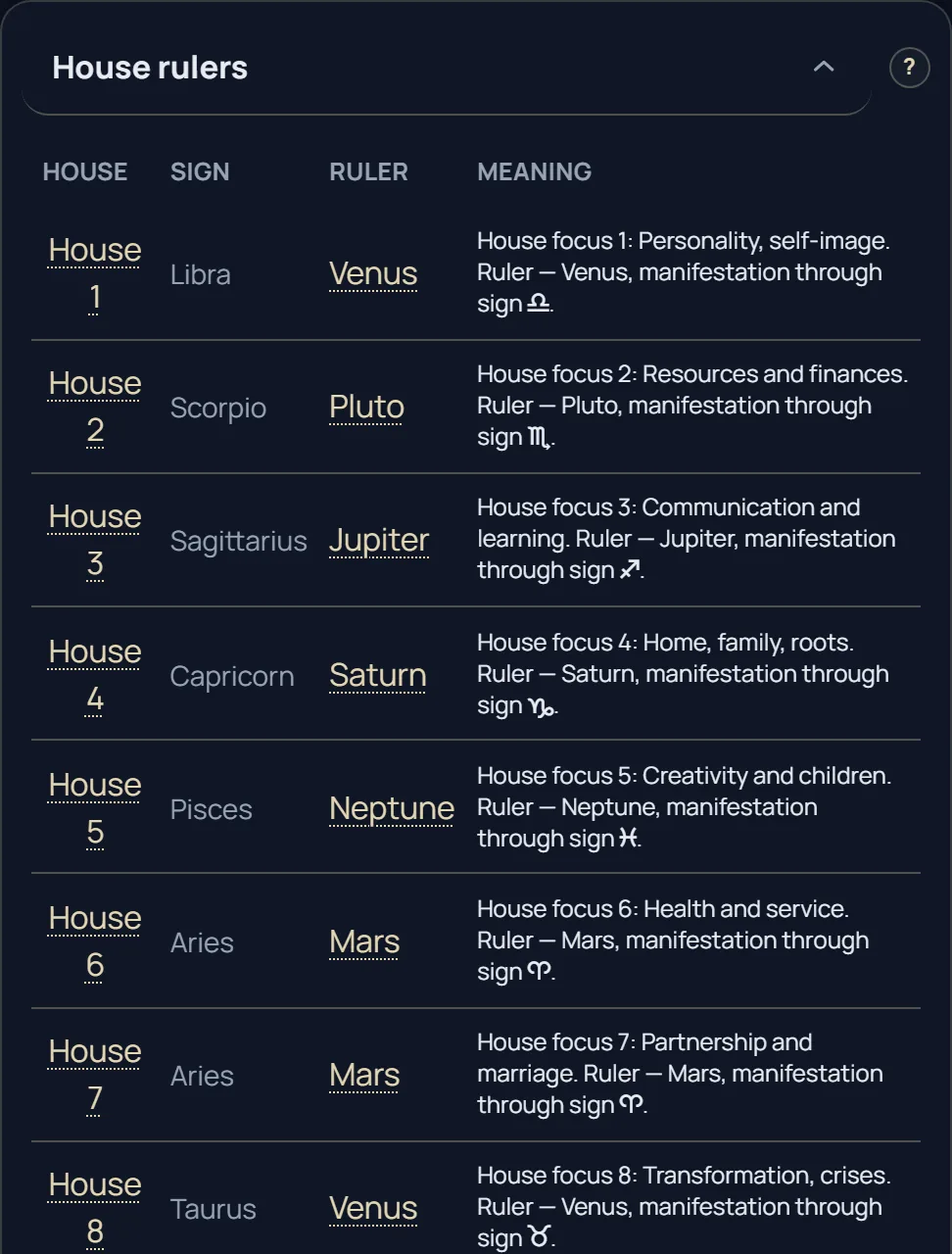
Put natal chart, Saturn, and Jupiter together
The strongest career astrology reading is comparative. It does not ask only what the chart means. It asks how the long-term pattern interacts with current conditions.
Use this simple framework:
Natal chart: the baseline
What kind of work style, ambition pattern, and money behavior repeats over time?
Saturn: the pressure point
What currently requires discipline, accountability, or a more adult structure?
Jupiter: the opening
Where is growth becoming easier to access, test, or scale?
Then ask one final question: does the opportunity help solve the pressure in a way that fits the baseline?
That question cuts through a lot of confusion.
For example:
- If the baseline favors careful expertise, Saturn may demand stronger credentials, and Jupiter may bring a teaching or consulting opening.
- If the baseline favors autonomy, Saturn may expose weak financial planning, and Jupiter may open a wider client network.
- If the baseline shows strong earning potential through partnership, Saturn may test trust and boundaries, while Jupiter brings a valuable collaborator.
Notice what this reading method does. It does not force a single job title. It identifies the form of progress that is most workable.
A step-by-step reading method for practical readers
Use this sequence when reading career astrology for yourself or when evaluating a report.
Step 1: Define the real decision
Write down the actual choice.
Examples:
- stay in a stable role or move toward self-employment
- pursue promotion or change fields
- focus on higher income or better work conditions
- scale current work or simplify it
If the decision is fuzzy, the reading will be fuzzy too.
Step 2: Extract three natal themes
Limit the natal reading to three repeatable themes:
- work environment that supports performance
- money behavior that helps or hurts stability
- ambition pattern that keeps returning
This prevents the reading from turning into a personality collage.
Step 3: Mark the Saturn issue
Name the current constraint in one sentence.
Examples:
- income is inconsistent because structure is weak
- career growth is blocked by missing training
- burnout is coming from poor boundaries, not low ambition
- progress is slow because long-term planning keeps being avoided
Step 4: Mark the Jupiter opening
Name the current opportunity in one sentence.
Examples:
- visibility is increasing through network effects
- a better-paying niche is opening through specialization
- relocation or remote work creates a broader market
- confidence is improving enough to ask for better terms
Step 5: Filter action through both
The right move usually respects Saturn and uses Jupiter.
That may mean:
- accepting a bigger role, but only with tighter systems
- taking a business opportunity, but only with stricter pricing and scope
- changing fields, but keeping a financial bridge in place
- investing in training before pushing for expansion
This is where astrology becomes practical decision support rather than vague symbolism.
Common reading mistakes
A few mistakes make career astrology less useful than it could be.
Treating the chart like a job-title machine
A chart can describe work style, ambition, pressure, and money behavior. It usually cannot reduce a career to one correct label.
Confusing talent with sustainability
Being able to do a job is not the same as being able to build a life around it.
Using Jupiter to justify every yes
Expansion without structure often creates mess, not progress.
Using Saturn to assume defeat
Saturn often describes the work required for stability. It does not automatically mean failure.
Ignoring money behavior
Career direction and money habits are linked. A strong work fit can still fail under chronic undercharging, avoidance of planning, or unstable risk-taking.
FAQ
How can a natal chart clarify work direction without becoming vague?
By focusing on repeatable patterns instead of grand labels. Look for how ambition operates, what kind of daily work is sustainable, and what money habits keep repeating. That gives a practical profile of work direction.
What is useful in career astrology for a practical reader?
The useful part is pattern recognition. Career astrology can help identify fit, friction, decision pressure, growth windows, and money behavior. It works best when tied to real choices and observable habits.
Can career astrology predict the exact right job?
No. It is better at showing conditions for better fit than naming one guaranteed profession. It can help narrow options and improve timing, structure, and self-awareness.
How do Saturn and Jupiter help with career decisions?
Saturn shows where stronger structure, discipline, or realism is needed. Jupiter shows where growth, access, or confidence is opening. Reading both together helps separate useful expansion from avoidable overreach.
The best way to use career astrology
Read it like a decision tool, not a verdict. Start with the natal pattern. Use Saturn to identify the real pressure. Use Jupiter to spot growth that is available now. Then choose the move that improves both fit and durability.
That is what makes career astrology useful for work and money. It does not need to be mystical to be revealing. It just needs to be read with a concrete question and a clear standard for what counts as progress.