The Full Moon in Taurus will occur on October 26, 2026, at 04:11:48 UTC. In astrology, a Full Moon is often read as a point of culmination or heightened awareness; Taurus symbolism brings attention to practical priorities, comfort, resources, and what can be maintained over time. These are interpretive themes, not predictions of specific events.
Rather than expecting a sudden turning point, use the date as a marker for checking what has become clearer. Notice where daily choices match your stated priorities—and where they do not.
When does the Full Moon in Taurus happen?
The event occurs at 04:11:48 UTC on October 26, 2026. The local calendar date and clock time will vary by timezone, so convert from UTC if you plan to observe or mark it locally.
This is a Full Moon event, not an eclipse. The date and time identify the exact astronomical moment; they do not establish a guaranteed period of influence before or after it.
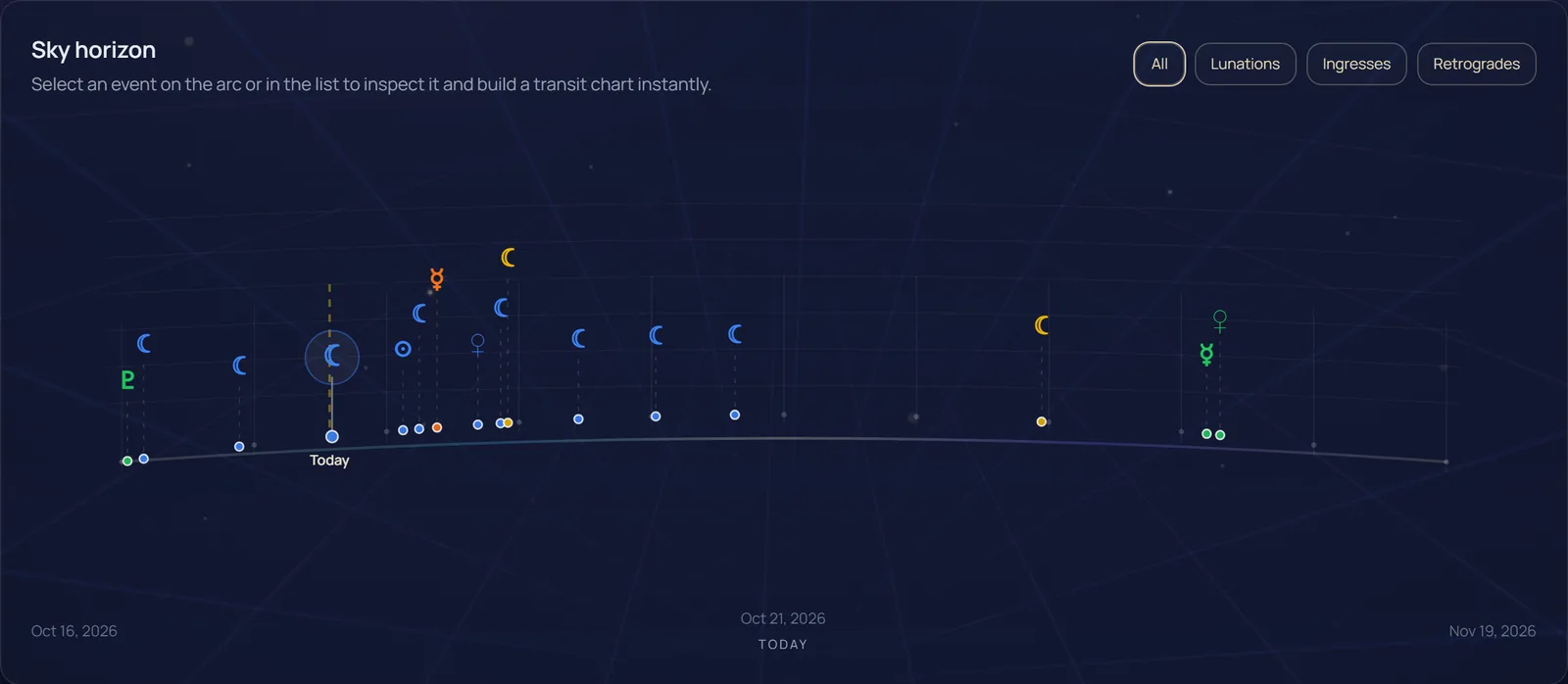
What Taurus symbolism can help you notice
Astrologically, Taurus is associated with steadiness, tangible needs, and the value of consistency. In a Full Moon reading, that symbolism can serve as a practical review prompt: What is working because it is reliable, and what is being maintained mainly out of habit?
Keep the questions concrete. You might review a routine that takes more time than it returns, a commitment that needs clearer limits, or a useful habit you have neglected while chasing short-term urgency. The point is not to make a dramatic change because of the date. It is to identify one adjustment that makes sense on its own merits.
How to prepare without turning the event into a prediction
A simple preparation is to note one area where you want more consistency. Before the date, write down what you currently do, what result you actually observe, and what small change you are considering. Revisit the note afterward and decide whether the evidence supports keeping the change.
For example, if a recurring task feels harder than it should, track how long it takes and what interrupts it for a few days. Then consider a realistic adjustment, such as setting a clearer time boundary or simplifying one step. The Full Moon can provide a calendar cue for review, but your decision should rest on the situation itself.
Reading the transit in context
A transit is a current planetary position interpreted in relation to a birth chart or to broader astrological symbolism. A single event does not mean the same thing for everyone, and astrology cannot establish that a particular outcome will happen.
For a personal reading, an astrologer might consider where Taurus falls in the chart and whether the lunation makes close aspects to natal planets. That context can suggest useful reflection questions, but it should not be treated as a fixed script. If you are learning the method, start with the event’s symbolism and your observable circumstances rather than searching for a prediction. See how to read an astrology transit chart step by step for a practical guide to chart context.
What to watch for around the date
Pay attention to what becomes easier to measure or name: a routine’s actual cost, a priority you keep postponing, or a choice between convenience now and steadiness later. Those observations are more useful than trying to identify a dramatic event that must happen.
If you follow several October transits, keep them distinct. Each has its own symbolism and timing; nearby calendar events do not automatically combine into one prediction. A brief note about what you notice can help you compare impressions with real outcomes instead of relying on hindsight alone.
FAQ
When does the Full Moon in Taurus happen?
It occurs on October 26, 2026, at 04:11:48 UTC. Check your local timezone for the corresponding local date and time.
How can I prepare for this upcoming event?
Choose one practical area to review, such as a routine, commitment, or priority. Record what is happening now, then consider a modest adjustment based on what you observe.
Does this Full Moon predict a specific personal event?
No. Astrology offers symbolic frameworks for reflection; it does not reliably establish what will happen to an individual. A chart interpretation can raise questions, not guarantee answers.
What changes when a slow transit activates a natal pattern?
In astrological interpretation, a slow transit may be used to examine a theme that develops over time, especially when it closely contacts a natal chart point. It does not prove that an event will occur. Look for observable patterns and use them as context for choices, not as a substitute for evidence.